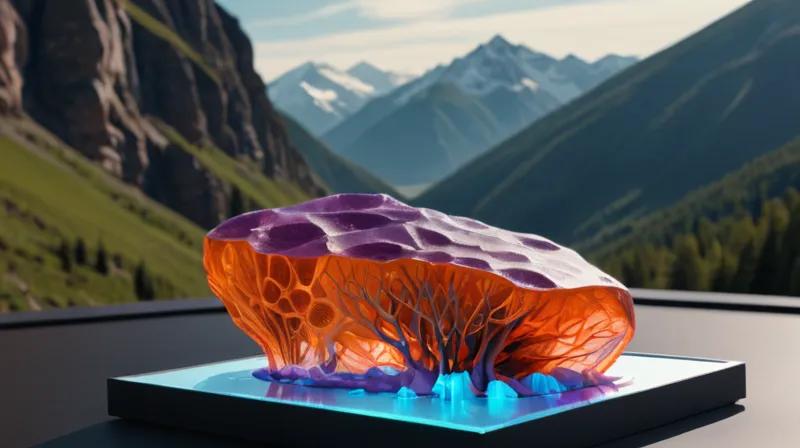
In a groundbreaking development for regenerative medicine and space biology, Auxilium Biotechnologies has successfully bioprinted kidney and liver tissue aboard the International Space Station (ISS). This marks the first time either organ tissue has been created in space, opening new frontiers in medical research and treatment possibilities.
The company’s achievement was part of a larger mission that saw the tissue samples return to Earth aboard a SpaceX cargo capsule last month. The results were officially announced this week, with Auxilium emphasizing that this was not a one-time experiment. In the same mission, the startup also tested other biological components, further validating the potential of microgravity environments for tissue engineering.
Why This Matters
Bioprinting in space offers unique advantages due to the microgravity environment, which allows cells to form more complex structures without the interference of gravity. This could lead to more effective tissue models for drug testing and, ultimately, organ transplants. The success of Auxilium’s work suggests that future space-based medical facilities could play a key role in advancing personalized medicine.
Future Implications
With increasing interest in long-term space exploration and habitation, the ability to produce human tissues in space could be vital for addressing health challenges in space. It also paves the way for new partnerships between biotech firms and space agencies. As Auxilium continues to refine its techniques, the company’s work may soon influence how we approach organ replacement therapies on Earth as well.
This milestone not only underscores the growing role of private companies in space research but also highlights the convergence of biotechnology and space exploration. As we move forward, such innovations may redefine the boundaries of what’s possible in medicine and beyond.