Introduction
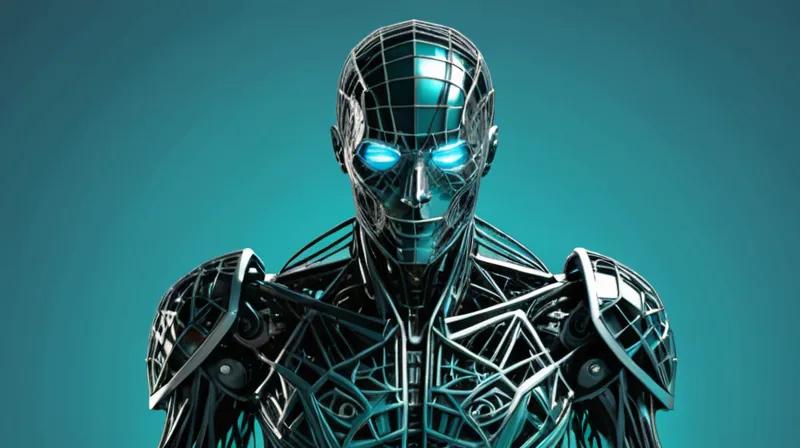
In this tutorial, you'll learn how to create a basic simulation of a humanoid robot using Python and the PyBullet physics engine. This is inspired by the recent development of humanoid robots like Foundation Future Industries' Phantom MK-1, which are being tested by the U.S. military for various applications. While you won't build a real robot, you'll gain foundational knowledge about robot simulation that's essential for understanding how these advanced systems work.
Robot simulation allows us to test movements, interactions, and behaviors without physical hardware. This is crucial for developing control systems, path planning, and understanding how robots can navigate complex environments.
Prerequisites
To follow this tutorial, you'll need:
- A computer with Python installed (Python 3.7 or higher recommended)
- Basic understanding of Python programming concepts
- Internet connection for downloading packages
No prior experience with robotics or physics simulation is required – we'll explain everything step by step.
Step-by-Step Instructions
1. Install Required Packages
First, we need to install PyBullet, which is a Python module for physics simulation. It's perfect for creating robot simulations without needing expensive hardware.
pip install pybulletWhy this step? PyBullet provides a realistic physics engine that can simulate gravity, collisions, and joint movements – essential features for robot simulation.
2. Create a Basic Robot Simulation
Let's start by creating a simple Python script that initializes a physics simulation and loads a basic robot model.
import pybullet as p
import time

# Connect to the physics server
p.connect(p.GUI)

# Set the gravity
p.setGravity(0, 0, -9.81)

# Load a ground plane
planeId = p.loadURDF("plane.urdf")

# Load a simple robot model
robotId = p.loadURDF("./robot.urdf")

# Keep the simulation running
while True:
    p.stepSimulation()
    time.sleep(1./240.)
Why this step? This sets up the basic environment where our robot will exist. The GUI mode allows us to visualize the simulation in real-time, making it easier to understand what's happening.
3. Create a Simple Robot Model
Before we can simulate our robot, we need to create a basic robot model. Let's create a simple humanoid model using URDF (Unified Robot Description Format).
Create a file called robot.urdf with the following content:
<?xml version="1.0"?>
<robot name="simple_humanoid">
  <link name="base_link">
    <visual>
      <geometry>
        <box size="0.5 0.3 0.8"/>
      </geometry>
      <origin rpy="0 0 0" xyz="0 0 0"/>
    </visual>
    <collision>
      <geometry>
        <box size="0.5 0.3 0.8"/>
      </geometry>
      <origin rpy="0 0 0" xyz="0 0 0"/>
    </collision>
  </link>

  <link name="head">
    <visual>
      <geometry>
        <sphere radius="0.15"/>
      </geometry>
      <origin rpy="0 0 0" xyz="0 0 0.5"/>
    </visual>
    <collision>
      <geometry>
        <sphere radius="0.15"/>
      </geometry>
      <origin rpy="0 0 0" xyz="0 0 0.5"/>
    </collision>
  </link>

  <joint name="head_joint" type="revolute">
    <parent link="base_link"/>
    <child link="head"/>
    <axis xyz="0 0 1"/>
    <origin rpy="0 0 0" xyz="0 0 0.4"/>
  </joint>
</robot>
Why this step? The URDF file describes the physical structure of our robot. It defines links (parts) and joints (connections) that allow movement. This is the foundation of how we'll control our robot's motion.
4. Add Movement to Our Robot
Now let's modify our Python script to make our robot move. We'll add some basic joint control to make our robot's head rotate.
import pybullet as p
import time

# Connect to the physics server
p.connect(p.GUI)

# Set the gravity
p.setGravity(0, 0, -9.81)

# Load a ground plane
planeId = p.loadURDF("plane.urdf")

# Load our robot model
robotId = p.loadURDF("./robot.urdf")

# Get the index of the head joint
headJointIndex = 0

# Set the robot to a specific position
p.setJointMotorControl2(robotId, headJointIndex, p.POSITION_CONTROL, targetPosition=1.0)

# Keep the simulation running
while True:
    p.stepSimulation()
    time.sleep(1./240.)
Why this step? This demonstrates how we control robot movements through joint motors. In real humanoid robots, each joint can be controlled independently to achieve complex movements like walking or grasping.
5. Implement a Walking Motion
Let's enhance our simulation to make our robot walk. We'll control multiple joints to create a walking motion.
import pybullet as p
import time
import math

# Connect to the physics server
p.connect(p.GUI)

# Set the gravity
p.setGravity(0, 0, -9.81)

# Load a ground plane
planeId = p.loadURDF("plane.urdf")

# Load our robot model
robotId = p.loadURDF("./robot.urdf")

# Get joint indices (you'll need to adjust these based on your URDF)
headJointIndex = 0

# Create a walking motion
walkingTime = 0
while True:
    # Simple walking motion using sine wave
    walkingTime += 0.01
    headPosition = math.sin(walkingTime) * 0.5

    # Apply motor control to head joint
    p.setJointMotorControl2(robotId, headJointIndex, p.POSITION_CONTROL, targetPosition=headPosition)

    p.stepSimulation()
    time.sleep(1./240.)
Why this step? This simulates how real humanoid robots might move their limbs in a coordinated way. In more advanced systems, each joint would be controlled to create realistic walking patterns, similar to what Foundation Future Industries might be developing.
6. Add Sensors and Interaction
Humanoid robots often have sensors to perceive their environment. Let's add a simple sensor simulation to our robot.
import pybullet as p
import time

# Connect to the physics server
p.connect(p.GUI)

# Set the gravity
p.setGravity(0, 0, -9.81)

# Load a ground plane
planeId = p.loadURDF("plane.urdf")

# Load our robot model
robotId = p.loadURDF("./robot.urdf")

# Add a simple obstacle
obstacleId = p.loadURDF("./obstacle.urdf")

# Set initial position of obstacle
p.resetBasePositionAndOrientation(obstacleId, [2, 0, 0], [0, 0, 0, 1])

# Simulate robot moving toward obstacle
robotPosition = [0, 0, 0]
while True:
    # Get current robot position
    robotPosition = p.getBasePositionAndOrientation(robotId)[0]

    # Move robot toward obstacle
    if robotPosition[0] < 1.5:
        p.setJointMotorControl2(robotId, 0, p.POSITION_CONTROL, targetPosition=robotPosition[0] + 0.01)

    p.stepSimulation()
    time.sleep(1./240.)
Why this step? This shows how robots interact with their environment. Real humanoid robots would have sensors to detect obstacles and adjust their movement accordingly – a crucial capability for military applications like those mentioned in the news.
Summary
In this tutorial, you've learned how to create a basic humanoid robot simulation using Python and PyBullet. You've covered:
- Setting up a physics simulation environment
- Creating a simple robot model using URDF
- Controlling robot joints to create movement
- Simulating robot interaction with obstacles
This foundational knowledge is essential for understanding how companies like Foundation Future Industries develop advanced humanoid robots. While this simulation is basic, it demonstrates the core concepts that make complex robot systems possible – from simple movement to environmental interaction.
As you continue learning, you can expand this simulation to include more joints, more complex movements, and advanced sensor systems. The principles you've learned here are the building blocks of real humanoid robotics, whether for military applications or civilian use.