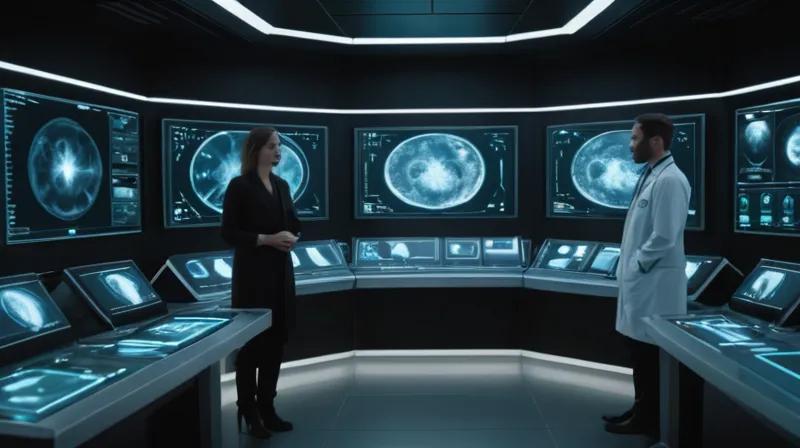
As artificial intelligence continues to advance in healthcare, human doctors are grappling with a fundamental question: what role remains for them in an era where machines can outperform them in diagnostic accuracy? A recent study published in a leading medical journal has sparked intense debate within the medical community, suggesting that AI systems are often superior to human physicians in identifying diseases and making clinical decisions.
AI Outperforms Human Diagnoses
The research, which analyzed thousands of medical cases across multiple specialties, found that AI algorithms consistently demonstrated higher accuracy rates in diagnosing conditions such as diabetic retinopathy, skin cancer, and heart disease. These systems, trained on vast datasets of medical images and patient records, were able to detect subtle patterns that even experienced doctors sometimes missed. The findings have left many physicians questioning their own expertise and the future of their profession.
Concerns Over Professional Identity
Medical professionals are expressing mixed emotions about these developments. While some welcome AI as a tool to enhance their capabilities, others fear that widespread adoption of AI diagnostic systems could diminish their value and job security. Dr. Sarah Chen, a radiologist at a major hospital, noted, "We've always been taught to trust our instincts and experience, but when a machine can do it better, it forces us to reevaluate what we bring to the table." The study's authors argue that AI should be seen as a complement rather than a replacement, but the practical implementation of this vision remains challenging.
Looking Forward
Healthcare institutions are now exploring hybrid models where AI handles initial screenings and routine diagnoses, while human doctors focus on complex cases requiring empathy and nuanced decision-making. This shift could redefine the doctor-patient relationship and reshape medical education, emphasizing skills that machines cannot replicate. As the medical field adapts to this technological revolution, one thing remains clear: the future of healthcare will be a collaborative effort between human expertise and artificial intelligence.