Introduction
AMD's recent partnership with Foundation AI, a San Francisco-based startup backed by Eric Trump, marks a significant development in the AI hardware landscape. This collaboration centers on the deployment of AMD's advanced processors for humanoid robot systems, signaling a strategic shift in how compute resources are being allocated for complex AI applications. The move reflects the growing importance of specialized hardware in enabling the next generation of artificial intelligence systems, particularly those requiring real-time decision-making and human-like interaction capabilities.
What is Humanoid Robot AI?
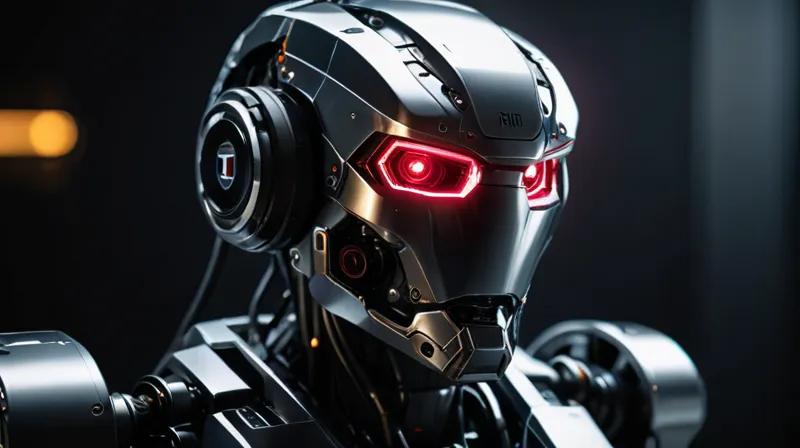
Humanoid robots represent a convergence of several advanced AI disciplines, including computer vision, natural language processing, robotics control, and machine learning. These systems are designed to mimic human form and behavior, requiring sophisticated neural networks to process sensory inputs, make decisions, and execute physical movements. Unlike traditional industrial robots, humanoid AI systems must navigate complex environments, interpret human gestures and speech, and perform tasks that require contextual understanding and adaptability.
The computational demands of humanoid robotics are substantial. These systems require real-time processing of multiple sensor streams including high-resolution cameras, LiDAR, microphones, and tactile sensors, all while maintaining low latency for human-like interaction. This necessitates powerful, efficient processors capable of handling both the intensive machine learning workloads and the real-time control systems required for physical interaction.
How Does the Hardware Infrastructure Work?
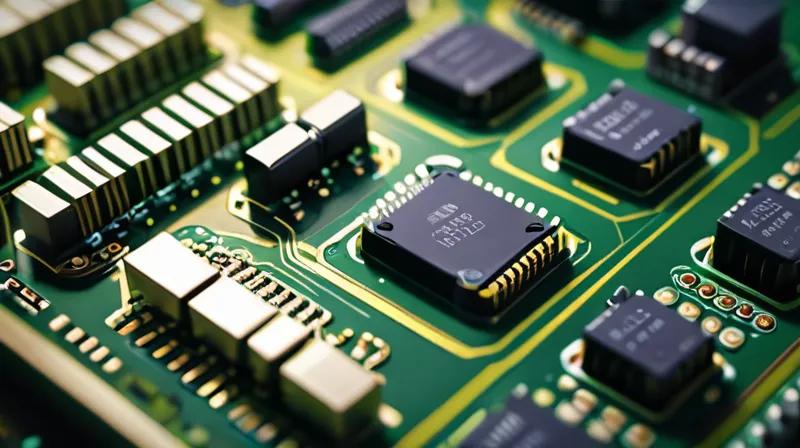
The architecture supporting humanoid AI systems involves a multi-tiered computational framework. At the core, AMD's processors leverage their advanced microarchitectures, including the EPYC and Ryzen series, which feature multiple CPU cores, integrated GPU capabilities, and high-bandwidth memory interfaces. These processors are optimized for both high-throughput computing and low-latency response times.
The system architecture typically employs a heterogeneous computing approach, where different types of processors handle specific tasks. CPUs manage general-purpose computing and system control, while specialized AI accelerators (such as AMD's Radeon Instinct series or integrated AI cores) handle neural network inference. Memory hierarchy plays a crucial role, with high-bandwidth memory (HBM) and cache optimization ensuring rapid data access for real-time processing.
For humanoid applications, the compute requirements are particularly demanding due to the need for simultaneous processing of multiple modalities. Computer vision algorithms require massive parallel processing for real-time object recognition and scene understanding, while natural language processing models must handle conversational flow with minimal latency. The integration of these systems requires careful consideration of power efficiency, thermal management, and real-time constraints.
Why Does This Matter for AI Development?
This partnership represents a critical inflection point in AI hardware evolution, demonstrating the industry's recognition that specialized compute is essential for advancing humanoid robotics. The shift from general-purpose computing to purpose-built AI infrastructure reflects the maturation of machine learning workloads and the increasing complexity of real-world applications.
From a technical perspective, this development highlights the growing importance of edge computing in AI deployment. Unlike cloud-based systems that require constant internet connectivity, humanoid robots need local processing capabilities to ensure responsiveness and privacy. This necessitates powerful yet efficient processors that can operate within the physical constraints of robotic platforms.
The collaboration also underscores the economic implications of AI hardware development. As AI applications become more sophisticated, the demand for specialized processors increases, driving innovation in chip design and creating new market opportunities. This trend toward specialized hardware reflects the industry's move beyond general-purpose processors toward domain-specific solutions.
Key Takeaways
- Humanoid AI systems require integrated computing architectures that balance high-throughput processing with real-time response capabilities
- Specialized hardware, such as AMD's processors, plays a crucial role in enabling complex AI applications that demand simultaneous processing of multiple sensor inputs
- The partnership reflects the industry's shift toward edge computing for AI applications, emphasizing local processing over cloud dependency
- Advanced AI hardware development is becoming increasingly specialized, with new architectures designed specifically for complex robotics applications
- This trend indicates the maturation of AI workloads and the growing recognition that general-purpose computing is insufficient for advanced applications