Introduction
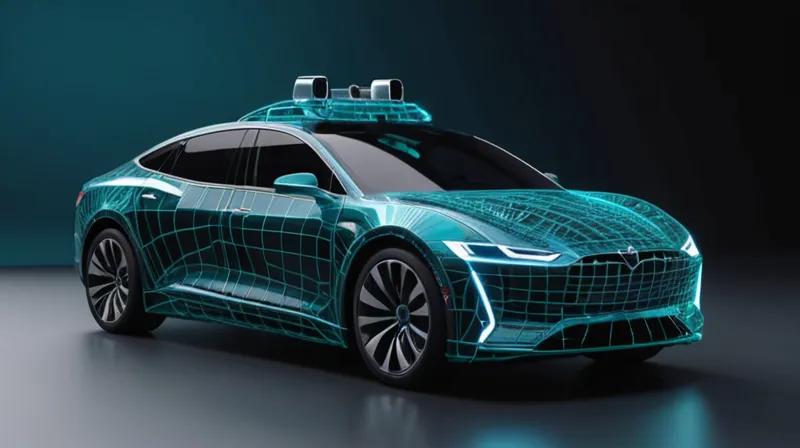
Apple's ambitious self-driving car program, codenamed 'Project Titan,' ultimately failed to deliver a commercial autonomous vehicle. However, the program's legacy extends far beyond its automotive aspirations, leaving behind a significant technological footprint in the form of advanced AI processing capabilities. This case study illuminates the intricate relationship between hardware-software co-design and AI performance optimization, particularly in the context of edge computing and on-device machine learning.
What is Edge AI Processing?
Edge AI processing refers to the execution of artificial intelligence algorithms directly on local devices—such as smartphones, vehicles, or IoT sensors—rather than relying on remote cloud servers. This paradigm shift addresses critical constraints including latency, bandwidth, privacy, and reliability. The fundamental challenge lies in deploying sophisticated machine learning models with substantial computational requirements on resource-constrained hardware.
In the context of autonomous vehicles, edge AI processing is paramount because:
- Real-time decision-making requires sub-millisecond response times
- Network connectivity may be unreliable or unavailable
- Privacy concerns demand sensitive data processing locally
- Bandwidth limitations prevent continuous data transmission
How Does Edge AI Processing Work?
Edge AI implementation involves several sophisticated architectural components:
Hardware Acceleration: Specialized processors like Apple's A17 Bionic chip incorporate dedicated neural engine units that perform matrix operations at unprecedented speeds. These units execute dot products and convolutions—core operations in deep learning—using highly parallelized architectures.
Model Optimization: Techniques such as quantization, pruning, and knowledge distillation compress large neural networks into smaller, efficient versions. For instance, a 100-million parameter model might be reduced to 10 million parameters while maintaining 95% accuracy through advanced compression algorithms.
Neural Architecture Search (NAS): Automated methods for designing optimal network architectures that balance performance with computational efficiency. This involves training reinforcement learning agents to discover architectures that maximize accuracy while minimizing resource consumption.
Memory Hierarchy Management: Efficient caching strategies and data movement optimization are crucial. The processor employs sophisticated memory controllers that manage data flow between high-speed caches and main memory, reducing bottlenecks that could severely impact performance.
Why Does This Matter?
Apple's Titan program's influence on AI chip development demonstrates several critical technological implications:
Computational Efficiency: The program's requirements forced Apple to develop processors that could execute complex AI workloads with minimal power consumption. This led to innovations in architecture design where specialized units handle specific operations more efficiently than general-purpose processors.
Competitive Advantage: The resulting AI capabilities have translated into superior performance across Apple's ecosystem, from Siri's voice recognition to camera image processing. This represents a fundamental shift from relying on cloud-based processing to achieving state-of-the-art performance on-device.
Industry Impact: The program's technical contributions have influenced the broader AI hardware landscape, pushing competitors to develop more sophisticated edge processing capabilities. The emphasis on on-device AI processing has become a competitive differentiator in mobile and automotive markets.
From a systems perspective, this represents a convergence of several advanced concepts including:
- Hardware-software co-design optimization
- Energy-efficient computing architectures
- Real-time system constraints and scheduling
- Neural network compression techniques
Key Takeaways
Apple's failed self-driving car program ultimately became a catalyst for revolutionary AI chip development. The program's emphasis on on-device processing requirements drove innovations in specialized hardware acceleration, model optimization, and memory management. This case illustrates how ambitious technological goals, even when not fully realized, can produce unexpected breakthroughs in adjacent fields.
The technical legacy includes:
- Advanced neural engine architectures
- Efficient model compression methodologies
- Real-time AI processing capabilities
- Energy-conscious design principles
This demonstrates that failure in one domain can paradoxically lead to success in another, highlighting the importance of iterative innovation and cross-domain application of technological advances.