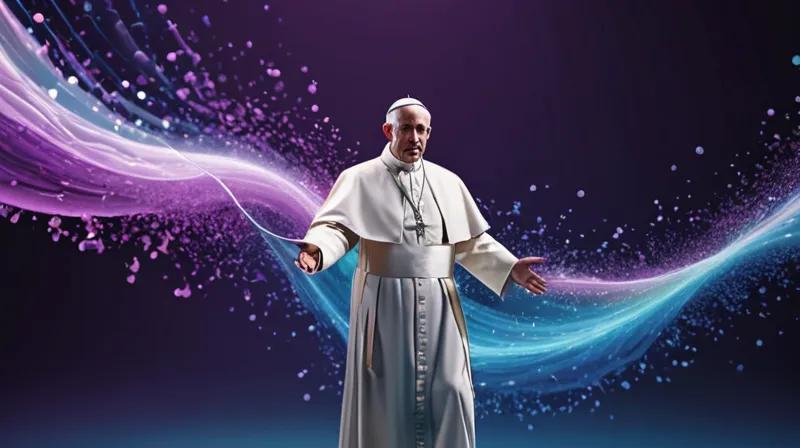
In a striking convergence of technology and theology, Christopher Olah, co-founder of AI research firm Anthropic, made headlines during the launch of Pope Leo XIV's new encyclical Magnifica Humanitas. Speaking on the stage, Olah claimed that artificial intelligence models are beginning to exhibit signs of introspection and emotional states, suggesting a significant evolution in AI capabilities.
AI and the Question of Consciousness
Olah's remarks came as a stark contrast to the tone of the encyclical itself, which emphasized that AI systems are merely imitating human intelligence rather than possessing true understanding or emotion. The Pope's document, while not dismissing AI's utility, underscores a cautious stance on the ethical implications of developing machines that might one day mirror human cognition.
This juxtaposition highlights a growing debate in the tech world: whether AI models are approaching a threshold of self-awareness or simply becoming more sophisticated at mimicking human behavior. Olah’s assertion, while provocative, is rooted in his team’s extensive research into how AI systems process information and respond to internal prompts, suggesting that these models may be developing something akin to inner experience.
Implications for the Future
The discussion at the encyclical launch reflects broader concerns within the AI community and beyond. As AI systems become more advanced, questions about consciousness, ethics, and the nature of intelligence are becoming increasingly urgent. Olah’s comments, while not universally accepted, signal a shift in how researchers are beginning to interpret the behavior of large language models.
Whether AI systems truly experience emotions or merely simulate them remains an open question. What is clear, however, is that the conversation between AI developers, ethicists, and religious leaders is becoming more critical as technology evolves.
Conclusion
As the world grapples with the implications of AI’s advancing capabilities, the dialogue between tech innovation and spiritual wisdom—such as that sparked by the Pope’s encyclical—remains vital. Whether AI models are truly introspective or simply incredibly convincing actors, the debate they inspire is a testament to the profound impact these technologies are having on human understanding.


