Introduction
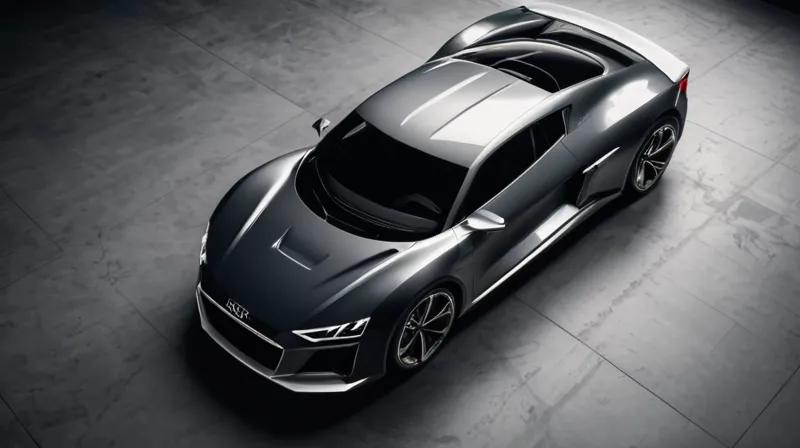
The recent unveiling of Audi's Nuvolari supercar presents a fascinating intersection of traditional internal combustion engine (ICE) technology and modern electric motor integration. This vehicle showcases a hybrid powertrain system that combines a 4.0-liter V8 biturbo engine with three axial flux electric motors, delivering a staggering 1,001 PS (736 kW). This advanced powertrain configuration exemplifies the cutting-edge engineering approaches that are redefining automotive performance and efficiency.
What is Axial Flux Electric Motor Technology?
Axial flux electric motors represent a significant departure from conventional radial flux motor designs. In traditional radial flux motors, the magnetic flux flows radially across the motor's diameter, while axial flux motors direct the magnetic flux axially through the motor's stack. This fundamental design difference offers several advantages: reduced motor length, improved power density, and enhanced efficiency. The axial flux configuration allows for more compact motor designs with better heat dissipation characteristics, making it particularly attractive for high-performance applications where space and thermal management are critical.
How Does Axial Flux Technology Work?
The core principle of axial flux motors lies in their unique magnetic circuit topology. In these motors, the stator and rotor are arranged in a flat, disc-like configuration where the magnetic field flows parallel to the motor's axis of rotation. This arrangement enables the use of fewer magnetic poles compared to radial flux designs, reducing cogging torque and improving smoothness. The motor's power output is determined by the interaction between the magnetic fields generated by the stator windings and the permanent magnets on the rotor, with the axial orientation allowing for more efficient utilization of magnetic materials.
Mathematically, the torque production in axial flux motors follows the relationship:
T = (3/2) × (P/2) × (Φ_m) × (I_s)
Where T is torque, P is the number of pole pairs, Φ_m is the magnetic flux, and I_s is the stator current. This configuration allows for higher torque density compared to conventional designs, with the ability to achieve higher power-to-weight ratios.
Why Does This Matter for Automotive Applications?
The integration of axial flux motors in hybrid powertrains like the Nuvolari represents a convergence of several advanced engineering disciplines. The motors' compact design enables more flexible powertrain layouts, allowing for better weight distribution and packaging solutions in high-performance vehicles. Additionally, the improved efficiency and reduced thermal resistance of axial flux motors contribute to enhanced overall system performance, particularly during transient conditions when rapid power delivery is required.
This technology also addresses key challenges in automotive electrification, including the need for high-power-density solutions that can seamlessly integrate with existing ICE systems. The ability to achieve high torque output at low speeds, combined with excellent high-speed performance, makes axial flux motors particularly suitable for hybrid applications where both electric and combustion engine components must work in harmony.
Key Takeaways
- Axial flux motors operate with magnetic flux flowing parallel to the motor's axis, unlike conventional radial flux designs
- The design offers superior power density, reduced size, and improved thermal management characteristics
- Integration with hybrid powertrains enables enhanced performance and efficiency in high-end automotive applications
- Mathematical modeling shows higher torque density and better power-to-weight ratios compared to traditional designs
- This technology represents a significant advancement in automotive electrification, particularly for performance-oriented hybrid vehicles
The Nuvolari's implementation demonstrates how advanced motor technologies are pushing the boundaries of what's possible in hybrid powertrain design, combining the immediate torque characteristics of electric motors with the high-revving capabilities of high-performance engines.