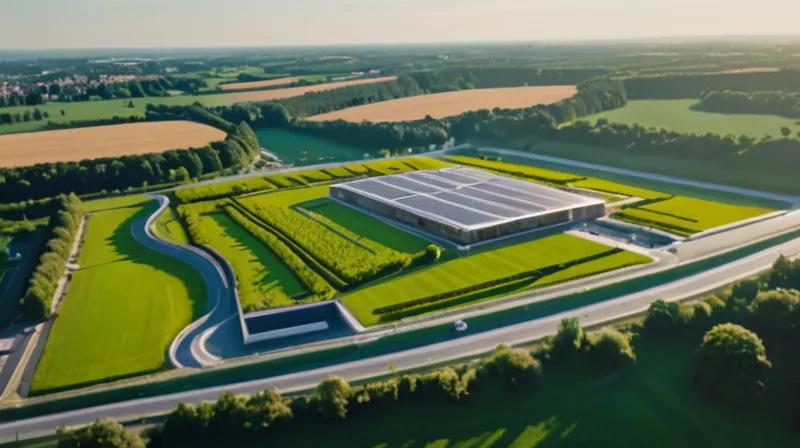
In a bold move toward sustainable infrastructure, Austrian startup REPS has secured $23.6 million in funding to scale its innovative technology that converts road traffic into electricity. The company’s unique approach involves embedding energy-harvesting slabs into roads, which capture the kinetic energy generated by vehicles passing over them.
First Installation in Hamburg
REPS recently installed its first “road power plant” at the Port of Hamburg, marking a significant step in testing the viability of its technology in real-world conditions. The system is designed to harness the energy from heavy traffic, particularly trucks, which exert substantial pressure on road surfaces. This pilot project is not only a technical demonstration but also a critical test of the technology’s scalability and economic feasibility.
Economic Viability and Future Prospects
The company’s next challenge lies in proving that its energy-harvesting system can be economically sustainable beyond the controlled environment of a port. While the concept is promising, widespread adoption will depend on factors such as installation costs, durability, and the efficiency of energy conversion. REPS aims to address these issues as it looks to expand beyond its initial test site, with plans to install systems in urban and rural roadways across Europe.
Industry experts see this as a potential game-changer in the push for decentralized renewable energy sources. If successful, REPS’ technology could transform roads into power-generating assets, contributing to a more sustainable transportation ecosystem.
Conclusion
With $23.6 million in funding, REPS is well-positioned to scale its technology and prove that road traffic can indeed be a source of clean energy. As the company continues to refine its approach and address economic hurdles, the potential for widespread implementation remains high—offering a novel solution in the global quest for green energy innovation.