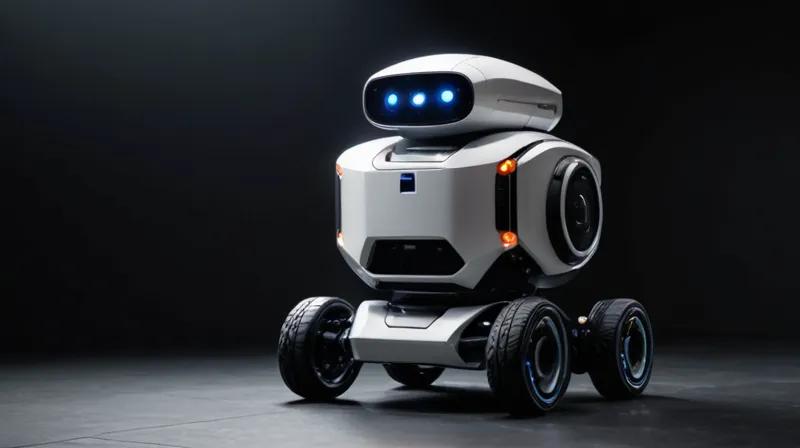
Robot.com, the San Francisco-based startup formerly known as Kiwibot, is making a bold shift in its business strategy, moving beyond its roots in campus delivery robots to venture into the realm of workplace humanoids. The company unveiled its new R-noid model, a wheeled humanoid designed to perform a range of tasks in high-traffic environments such as kitchens, warehouses, and healthcare facilities.
Expanding Beyond Delivery
The R-noid humanoid is engineered to package orders, load and unload boxes, and prep workstations — tasks that are typically labor-intensive and prone to human error. According to CEO Felipe Chavez, the company’s pivot is driven by the growing demand for automation in industries where physical dexterity and adaptability are key. "We're not just automating tasks; we're creating a new category of physical intelligence," Chavez told Business Insider.
Humanoid Robotics in the Workplace
While many robotics companies have focused on either industrial or service automation, Robot.com’s approach combines mobility with a humanoid form factor to navigate complex environments. The R-noid’s design allows it to operate in spaces traditionally reserved for human workers, offering a blend of flexibility and functionality. This move aligns with broader industry trends where companies are seeking solutions to labor shortages and increasing operational demands.
Strategic Implications
With the growing interest in workplace automation, Robot.com’s humanoid model could position the company as a leader in physical intelligence. The firm’s previous success in campus delivery, where it deployed over 1,000 robots, provides a strong foundation for scaling into new verticals. Analysts suggest that the R-noid could be particularly impactful in logistics and food service, where efficiency and consistency are paramount.
As the company continues to develop its humanoid technology, the focus will be on refining its AI capabilities and expanding its applications in real-world settings. The future of workplace robotics may well be shaped by companies like Robot.com that are pushing the boundaries of what machines can do in human-centric environments.