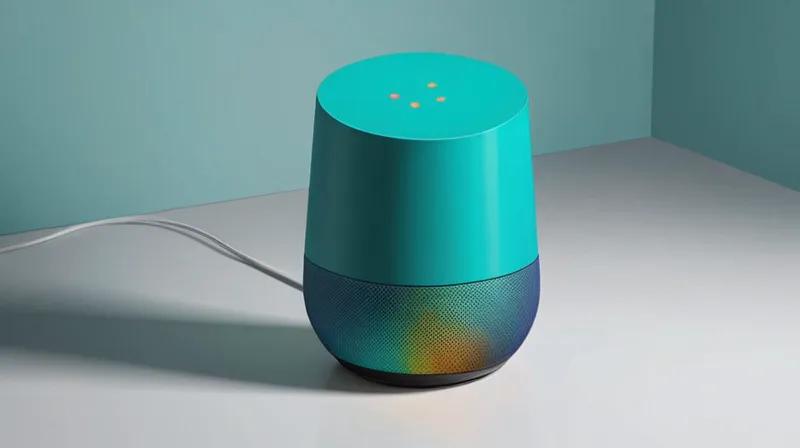
Google is enhancing its smart home assistant capabilities with a new update to the Google Home app, aimed at making interactions with its Gemini AI more intuitive and dependable. The latest release focuses on improving how users can communicate their smart home requests, moving beyond simple commands to more descriptive and natural language inputs.
Smarter Voice Control Through Descriptive Commands
With this update, users can now express their preferences in more creative ways. For example, instead of saying "turn on the lights," you might say "the color of the ocean" to set a specific lighting ambiance. The Gemini AI is designed to interpret these more abstract requests and translate them into actionable smart home commands. This evolution represents a shift toward a more conversational and personalized user experience.
Enhanced Natural Language Processing
The update leverages advanced natural language processing to better understand context and user intent. This means that when you ask for a specific mood lighting or request a certain temperature, Gemini can interpret these nuances more accurately. Google's approach reflects a broader industry trend toward more human-like interactions with AI assistants, where understanding the emotional or descriptive aspects of user requests is just as important as literal command execution.
Implications for Smart Home Ecosystems
This improvement positions Google Home as a more sophisticated option in the smart home space, where voice control is becoming increasingly central to daily routines. By making AI assistants more adept at interpreting complex, descriptive commands, Google is not only improving user satisfaction but also expanding the potential applications for smart home technology. As AI continues to evolve, such updates signal a move toward more seamless integration between human preferences and automated home systems.