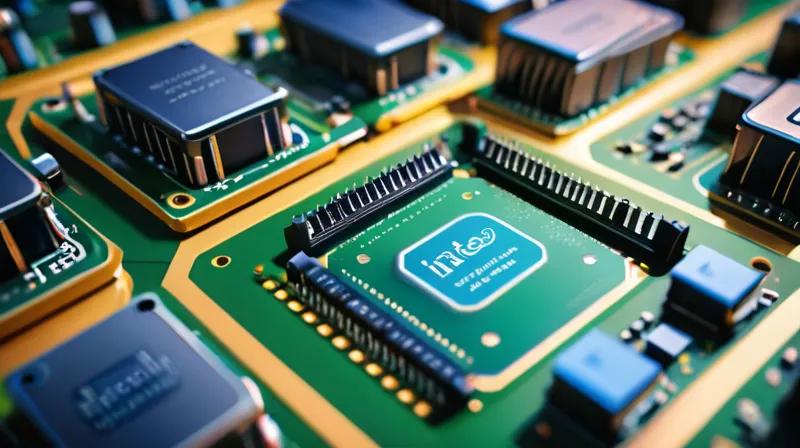
In a significant shift for the semiconductor industry, Intel is emerging as a key player in the AI chip manufacturing space, thanks to growing demand from major tech firms like Google and Nvidia. Despite its struggles in recent years, Intel's foundry division is now being seen as a potential backup for TSMC, which has been overwhelmed by the surge in demand for advanced AI chips.
Google's AI Chip Order and Nvidia's Technology Exploration
Google has placed a major order for over three million AI chips from Intel, scheduled for delivery in 2028. This move signals a renewed confidence in Intel's capabilities as a chip manufacturer. Meanwhile, Nvidia is reportedly testing Intel's manufacturing technology for its upcoming Feynman architecture, indicating that the company is exploring ways to leverage Intel's production expertise to support its own AI ambitions.
Industry Demand and TSMC's Strain
The growing demand for AI chips has outpaced the capacity of leading foundries like TSMC, creating a bottleneck in the supply chain. This situation has opened the door for Intel to step in as a potential alternative supplier. Analysts suggest that this renewed interest in Intel's manufacturing capabilities could be a turning point for the company, which has faced stiff competition and declining market share in recent years.
Conclusion
As the AI industry continues to expand, Intel's re-emergence as a viable chip manufacturer could reshape the competitive landscape. With Google and Nvidia both turning to the company for support, Intel's foundry division may finally find its footing in the high-demand AI chip market.