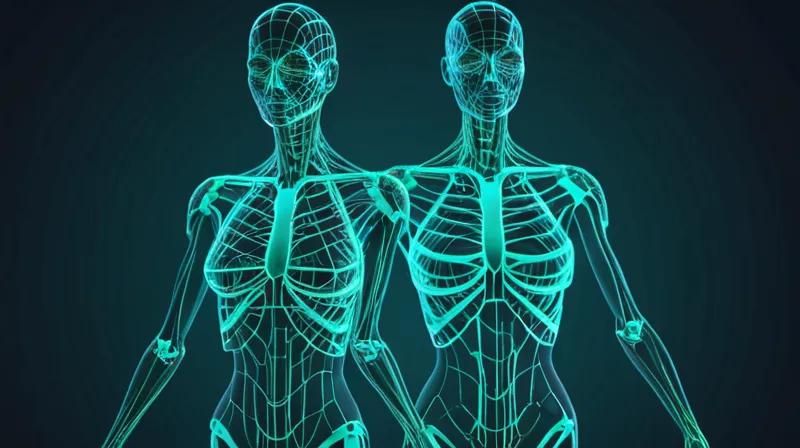
In a groundbreaking move to address one of healthcare's most persistent challenges, Mantis Biotech has unveiled a novel approach to creating digital twins of human beings. The company's innovative technology tackles the critical issue of data scarcity in medicine by synthesizing information from multiple fragmented sources to build comprehensive virtual representations of human anatomy, physiology, and behavior.
Overcoming Data Fragmentation
The healthcare industry has long struggled with the fragmentation of patient data across various systems, hospitals, and research institutions. Mantis Biotech's solution involves aggregating this disparate information to construct synthetic datasets that mirror real-world medical scenarios. These digital twins serve as virtual laboratories where researchers can test treatments, predict disease progression, and develop personalized medicine approaches without relying solely on traditional clinical trials.
Implications for Medical Research
The technology promises to revolutionize drug development and clinical research by providing researchers with access to vast amounts of anonymized, synthetic patient data. "This approach allows us to generate datasets that are statistically representative of real populations while maintaining privacy," explains a company spokesperson. The synthetic data can simulate rare diseases, test drug interactions, and model treatment outcomes across diverse demographic groups, potentially accelerating the discovery of new therapies.
Industry experts view this development as a significant step forward in personalized medicine, where digital twins could eventually be used to predict individual patient responses to treatments. The approach also addresses ethical concerns around patient data usage, as synthetic datasets eliminate the need for real patient information in many research applications.
Future Outlook
As healthcare systems worldwide grapple with increasing data complexity and privacy regulations, Mantis Biotech's digital twin technology offers a promising pathway toward more efficient, ethical, and effective medical research. The company's approach could fundamentally change how pharmaceutical companies and research institutions approach clinical development, potentially reducing costs and speeding up the time from discovery to treatment.