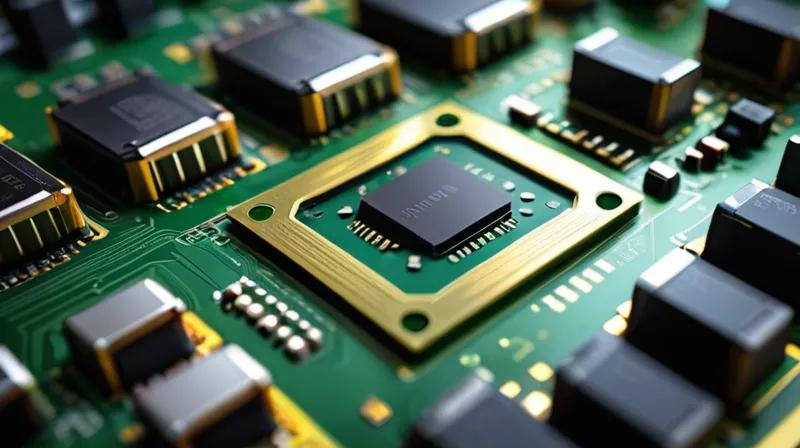
What is a DRAM shortage and why does it matter for AI?
Imagine you're building a LEGO castle, but the store runs out of red bricks. You can't finish your castle, and you might have to wait weeks or even months for more red bricks to arrive. This is exactly what's happening in the world of artificial intelligence (AI), but instead of red bricks, it's a type of memory chip called DRAM that's in short supply.
What is DRAM?
DRAM stands for Dynamic Random Access Memory. Think of it as the short-term memory of a computer. When your computer is running, it uses DRAM to store information that it needs right now — like a list of words you're typing or the images you're looking at. Without enough DRAM, your computer gets slow and can’t handle many tasks at once.
For AI systems, DRAM is even more important. AI models are like super-powerful brains that need to store and process tons of information quickly. When these models are training (learning from data), they need lots of memory to remember what they’ve learned and to make predictions. So, when there's not enough DRAM available, it can slow down or even stop the development of AI systems.
How does a DRAM shortage affect AI servers?
AI servers are like supercomputers that are specifically built to run AI models. Companies like Nvidia make these servers using special chips — like the Vera Rubin and Grace Blackwell chips mentioned in the news — that are designed to handle the heavy workloads of AI. But these chips need a lot of DRAM to function properly.
When there’s a shortage of DRAM, it’s like trying to build a race car with only half the parts. The car can’t run at full speed, and it costs more to build because the parts are expensive and hard to find. That’s why Nvidia’s AI servers are now 15% more expensive — because the memory chips they use are more costly due to the shortage.
Why does this matter for big tech companies?
Big tech companies like Microsoft, Google, and Meta are spending billions of dollars to build AI infrastructure — that means they’re buying lots of these powerful AI servers. When the price of these servers goes up, it affects their budgets and how fast they can develop new AI tools.
But here’s the interesting twist: these companies are also trying to reduce their dependence on certain suppliers, like Samsung, SK Hynix, and Micron — the companies that make DRAM. They want to have more control over their own technology supply chain. However, the shortage means they still have to rely on these suppliers, even though they’d prefer not to.
Key takeaways
- DRAM is a type of computer memory that’s crucial for AI systems to work fast and efficiently.
- A shortage of DRAM means that AI servers — which are used by big tech companies — become more expensive to build.
- Big tech companies are trying to reduce their reliance on certain chip suppliers, but shortages still force them to depend on those same suppliers.
- When memory is scarce, it can slow down the development of new AI technologies and increase costs for everyone involved.
In short, a shortage of memory chips can have a big impact on how fast and how cheaply AI systems can be built — and that affects the whole tech world!