Micron Technology has officially kicked off construction on a massive $9.3 billion expansion of its factory in Hiroshima, Japan, signaling the company's strong commitment to meeting the surging demand for AI-related memory solutions. The project, valued at ¥1.5 trillion, marks one of the most significant investments in the semiconductor industry's current AI memory boom, as global tech firms race to secure the high-performance chips needed for next-generation artificial intelligence systems.
High-Bandwidth Memory Production
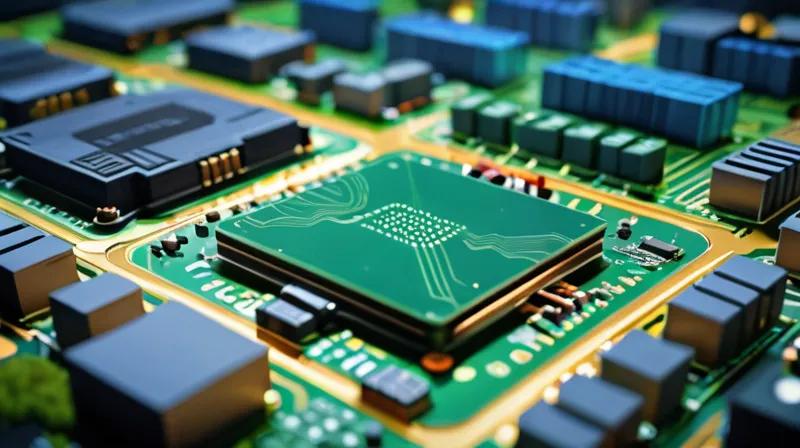
The new facility will specialize in producing high-bandwidth memory (HBM), a type of stacked DRAM that delivers significantly faster data transfer rates compared to traditional memory modules. This technology is critical for AI applications, particularly in data centers and supercomputers where massive amounts of data must be processed in real time. By expanding its HBM production capabilities, Micron is positioning itself to capture a larger share of the growing AI infrastructure market.
Strategic Move in a Competitive Market
With Micron's market valuation now exceeding $1 trillion, the investment underscores the company’s confidence in the long-term growth of AI memory demand. The expansion also reflects broader industry trends, as leading tech companies like NVIDIA, AMD, and Intel have all ramped up their own AI chip production efforts. The Hiroshima site will not only serve the Japanese market but is also expected to support global AI initiatives, reinforcing Micron’s role as a key supplier in the AI revolution.
Analysts suggest that this move could set a precedent for other semiconductor manufacturers to follow suit, as the demand for high-performance memory continues to outpace supply. As AI becomes increasingly embedded in everything from smartphones to autonomous vehicles, the pressure on memory chipmakers to scale production will only intensify.