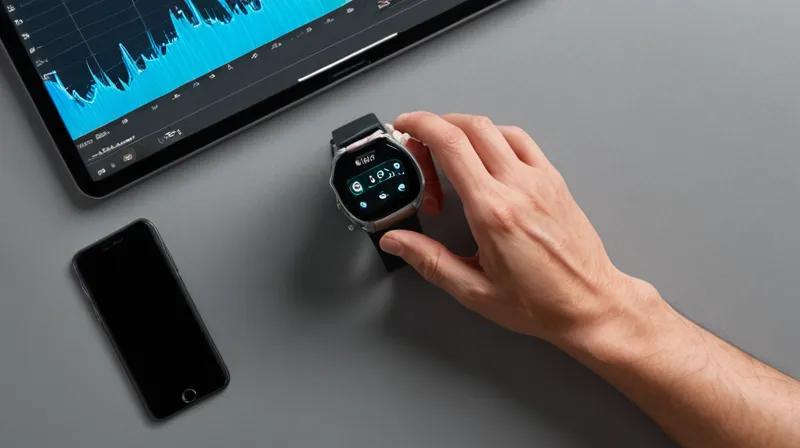
Engineers at MIT have developed a groundbreaking wearable device that could revolutionize the way humans interact with robots. The new ultrasound wristband is capable of tracking every finger movement in real time, offering unprecedented control over robotic hands through direct neural feedback.
How It Works
The device, detailed in a study published in Nature Electronics in March 2026, features a ring of miniature ultrasound transducers worn around the wrist. These transducers capture the motion of the fingers and hand, translating it into data that can be interpreted by a robotic system. The system tracks 22 degrees of freedom, which includes the complex movements of each finger and thumb, enabling precise control of a robotic hand.
Real-Time Control and Potential Applications
One of the most impressive aspects of this innovation is its ability to provide real-time control. Users can manipulate a robotic hand through gestures, and the system responds instantly, offering a seamless interface between human motion and machine action. This technology has broad implications, particularly in fields like rehabilitation, where patients recovering from hand injuries could use the device to relearn movement patterns, or in telepresence, where individuals might control robotic limbs remotely.
Additionally, the wristband could be integrated into virtual and augmented reality systems, enhancing immersive experiences by allowing users to manipulate digital objects with natural hand gestures. The device’s non-invasive nature and high precision make it a promising candidate for future prosthetic and assistive technologies.
Future Prospects
MIT’s innovation marks a significant step forward in human-machine interfaces. As the technology matures, it could be adapted for a range of applications, from surgical robotics to industrial automation. The research team is now exploring how to further miniaturize the device and improve its accuracy, potentially paving the way for commercial use in the near future.