Introduction
Neurological disorders like Parkinson’s disease often manifest with subtle, early symptoms that are difficult to detect through traditional clinical methods. However, recent advances in medical technology and artificial intelligence are opening new pathways for early diagnosis. A French-Belgian company, neuroClues, has developed a diagnostic tool that leverages eye-tracking technology and machine learning to detect neurodegenerative diseases years before symptoms appear. This approach is not just a novel diagnostic method but a convergence of several advanced AI and medical technologies.
What is Eye-Tracking for Neurological Diagnosis?
Eye-tracking technology records and analyzes eye movements, which are controlled by the brain’s neural circuits. In neurological disorders like Parkinson’s, changes in eye movement patterns (known as oculomotor biomarkers) often precede motor symptoms by years. These biomarkers include tremors, saccadic latency (the time it takes for the eye to move from one point to another), and smooth pursuit tracking (the ability to follow a moving object).
By capturing high-frequency infrared images—up to 800 per second—neuroClues' system can extract these subtle changes in eye behavior that are imperceptible to human observers. This is a form of biomarker detection, where measurable physiological signals are used to indicate disease presence or progression.
How Does the Technology Work?
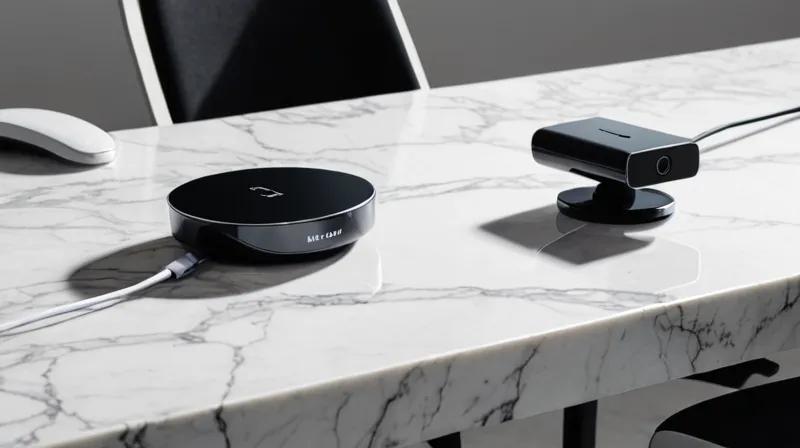
The neuroClues diagnostic system uses a portable, non-invasive headset equipped with high-speed infrared cameras. These cameras capture the reflection of infrared light off the eye’s surface, which allows for precise tracking of micro-movements. The data collected is then processed using machine learning algorithms, particularly deep learning models, to identify patterns in eye movement that correlate with specific neurological conditions.
Deep learning models, such as convolutional neural networks (CNNs), are trained on large datasets of eye-tracking data from both healthy individuals and patients with Parkinson’s, Alzheimer’s, and multiple sclerosis. These models learn to distinguish between normal and abnormal oculomotor behavior by identifying features in the movement data that are indicative of disease onset.
The system operates in real-time, generating a diagnostic score that reflects the likelihood of a neurological disorder. This score is derived from a combination of feature extraction and classification techniques, where features are extracted from raw eye movement data and then classified using supervised learning models.
Why Does This Matter?
This technology addresses a critical gap in current diagnostics: the inability to detect neurodegenerative diseases early. Traditional methods often rely on clinical symptoms, which are not only late indicators but also vary widely among patients. Early detection is crucial because it allows for earlier intervention, potentially slowing disease progression or improving quality of life.
Furthermore, the use of AI in this context represents a paradigm shift from subjective clinical assessment to objective, data-driven diagnosis. The ability to automate biomarker detection and classification reduces inter-observer variability and increases diagnostic accuracy. It also opens the door for remote diagnostics, where patients can be monitored from home, reducing the burden on healthcare systems.
From a research perspective, this approach provides a wealth of data that can be used to understand disease progression and evaluate treatment efficacy. It also enables large-scale screening, which is essential for identifying at-risk populations.
Key Takeaways
- Eye-tracking technology captures oculomotor biomarkers that precede clinical symptoms of neurological diseases.
- High-speed infrared cameras record up to 800 images per second, enabling precise analysis of eye movements.
- Deep learning models are used to extract features and classify patterns indicative of disease.
- Early detection can lead to better treatment outcomes and reduced healthcare burden.
- The technology is scalable and could enable remote diagnostics, making it accessible to broader populations.