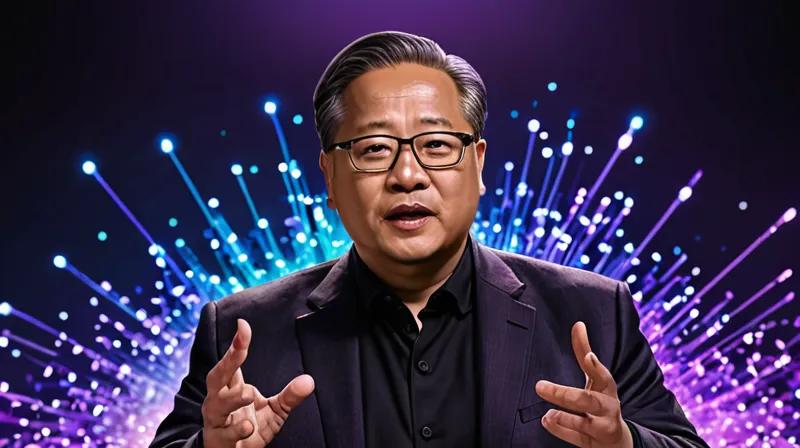
Nvidia CEO Jensen Huang has issued a stark warning to developers in the AI industry, emphasizing the critical importance of substantial investment in AI tokens for those generating significant revenue. Speaking candidly about the financial dynamics of AI development, Huang stated that if a developer earns half a million dollars, they should be spending at least $250,000 on AI tokens. This statement underscores the growing financial stakes in the AI ecosystem and reflects the increasing reliance on token-based systems for training and deploying machine learning models.
Strategic Investment in AI Infrastructure
Huang’s remarks come amid a surge in AI adoption across industries, where companies are increasingly turning to token-based models to power their applications. His assertion that developers should align their spending with their earnings suggests a strategic vision for sustainable growth in the AI sector. By advocating for higher token budgets, Huang is essentially promoting the idea that AI development is not just about innovation, but also about financial commitment to maintain competitive edge.
Broader Implications for the AI Market
The CEO’s comments also hint at a broader optimism about the AI industry’s revenue potential. He believes the market's financial upside is significantly underestimated, which could influence how investors and developers approach AI projects. This perspective may drive more aggressive investment strategies and potentially reshape the landscape of AI development funding. As AI technologies continue to mature, such guidance from industry leaders could set new benchmarks for resource allocation and strategic planning.
Conclusion
Huang’s message reinforces the idea that AI is no longer a novelty but a financial imperative. As companies scale their AI initiatives, the allocation of resources—particularly in the form of AI tokens—will play a pivotal role in determining success. His call to action is a clear signal that the AI industry is entering a new phase, one where financial commitment is as crucial as technical innovation.


