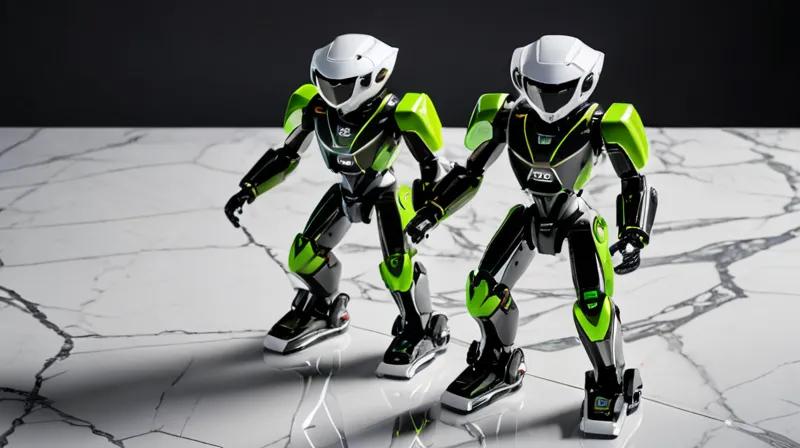
Nvidia is expanding its humanoid robot ambitions beyond its recent partnership with China’s Unitree, signaling a broader strategy to dominate the AI-powered robotics space. The company’s latest robot, unveiled at the Computex trade show in Taipei, is a collaborative effort involving three distinct entities: Unitree supplies the physical body, Sharpa contributes the hands, and Nvidia provides the computational core. This multi-partner approach reflects a growing trend in the tech industry to leverage specialized expertise across global firms.
Strategic Alliances in Robotics
The robot’s modular design highlights the complexity and specialization required in modern AI robotics. While Unitree brings its experience in humanoid robotics, Sharpa contributes its advanced hand manipulation technology. Nvidia, on the other hand, provides the powerful AI computing infrastructure that enables the robot to process sensory data, make decisions, and interact with its environment. This collaboration underscores how AI hardware leaders like Nvidia are positioning themselves not just as component suppliers but as central orchestrators in the development of next-generation robots.
Market Implications and Future Outlook
Nvidia’s strategy is also a response to increasing competition in the AI hardware market, especially as companies like Google, AMD, and even Tesla make strides in robotics and AI integration. The company’s Q4 financial results are expected to be a key indicator of investor confidence in the AI hardware sector. By focusing on partnerships and modular development, Nvidia aims to accelerate the deployment of humanoid robots in industries such as manufacturing, healthcare, and logistics.
Looking Ahead
As the AI and robotics landscape evolves, Nvidia’s move to collaborate with international firms like Unitree and Sharpa could set a new standard for how AI-driven robots are developed. The company’s next steps will likely involve scaling these partnerships and potentially introducing more advanced humanoid models that could reshape the future of automation.