Introduction
Jean-Baptiste Kempf, the lead developer of VLC Media Player, has recently raised $5 million for his startup Kyber, a company focused on creating an infrastructure layer for real-time control of remote devices. This development signals a significant shift toward the integration of AI and robotics, particularly in the realm of distributed systems and autonomous control. This article explores the core technology behind Kyber: real-time distributed control systems, how they function, and their implications for the future of robotics and AI.
What is Real-Time Distributed Control?
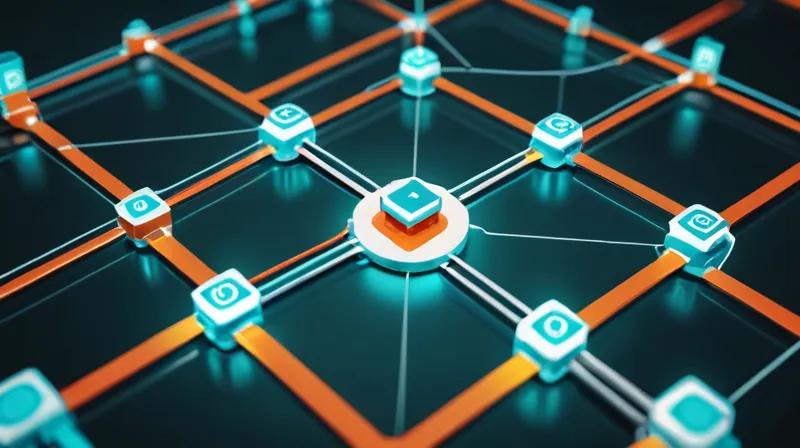
Real-time distributed control refers to a system architecture where multiple autonomous or semi-autonomous entities (such as robots, sensors, or drones) operate in a coordinated manner, sharing information and making decisions in real time. The term distributed implies that the control is not centralized — instead, decision-making is spread across multiple nodes or devices. Real-time means that the system must respond to inputs or events within strict time constraints, often measured in milliseconds or microseconds.
This is distinct from traditional control systems, which rely on a single central processor or controller to manage all actions. In contrast, distributed control systems are more scalable, resilient, and adaptable to complex environments.
How Does It Work?
At a technical level, real-time distributed control systems operate using a combination of communication protocols, control algorithms, and AI-driven decision-making. Each node in the system (e.g., a robot) has its own processing capabilities and communicates with others via a network, often using protocols like MQTT (Message Queuing Telemetry Transport) or DDS (Data Distribution Service).
These systems often use model predictive control (MPC) or reinforcement learning (RL) to make decisions. For instance, a robot may use RL to navigate a dynamic environment, while simultaneously sharing its state with other robots to avoid collisions. The system must also manage latency and network reliability to ensure that control commands are executed without delay.
Key components include:
- Edge computing: Processing is done locally on devices to reduce latency.
- AI/ML models: For perception, planning, and decision-making.
- Network layer: Ensures reliable, low-latency communication between nodes.
- Control loop: Continuous feedback between sensors, processors, and actuators.
Why Does It Matter?
The significance of real-time distributed control systems is immense, especially as we move toward a future where hundreds of millions of robots will be deployed in real-world applications. These systems enable:
- Autonomous fleets: For example, a delivery drone fleet that coordinates its routes in real time to avoid traffic or weather.
- Industrial automation: Factories with hundreds of robots working in parallel, communicating to optimize production.
- Search and rescue: Multiple robots navigating disaster zones, sharing data to locate survivors.
With the rise of multi-agent AI and swarm robotics, the ability to coordinate large-scale systems without a central controller is becoming critical. Kyber’s infrastructure addresses this by offering a scalable, real-time communication layer that can support such systems.
Key Takeaways
- Real-time distributed control systems enable coordination among multiple autonomous entities without a central controller.
- These systems rely on edge computing, AI/ML, and low-latency communication protocols.
- They are essential for scalable robotics applications, such as autonomous fleets or industrial automation.
- Kyber’s funding reflects growing interest in the infrastructure needed to support the next wave of AI-powered robotics.
As AI continues to evolve, the integration of distributed control systems with machine learning will be crucial for building intelligent, adaptive, and autonomous networks of robots that can operate seamlessly in complex environments.


