Understanding Tesla's Full Self-Driving (FSD) and Why It Matters
Introduction
Recently, a tragic car accident in Texas raised important questions about how self-driving car technology works. A Tesla Model 3 was driving at over 70 miles per hour when it crashed into a home, killing a 76-year-old woman. The National Transportation Safety Board (NTSB) found that the driver had manually pressed the accelerator pedal to 100 percent, overriding the car's automated driving system. This event brings us to an important concept: Full Self-Driving (FSD) technology.
What is Full Self-Driving (FSD)?
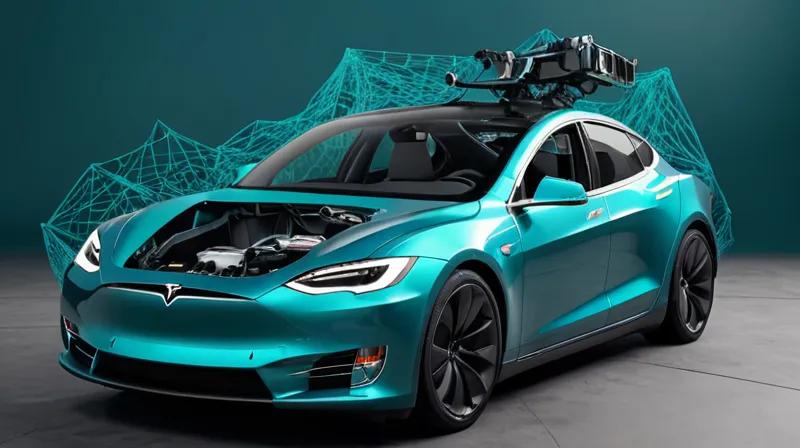
Full Self-Driving, or FSD, is a technology that helps cars drive themselves. It uses a combination of cameras, sensors, and artificial intelligence (AI) to understand what's happening around the car and make decisions like when to slow down, stop, or change lanes.
Think of FSD like a very smart assistant that helps you drive. It can help you avoid accidents, keep you in the right lane, and even park your car. But it's important to remember that FSD is not the same as a fully autonomous car that can drive without any human help. It's more like a helpful co-pilot that can take over some tasks, but you still need to be ready to take control at any time.
How Does FSD Work?
FSD works by using many different sensors on the car, like cameras and radar. These sensors collect information about the road, other vehicles, pedestrians, and traffic signs. The car's AI then processes this information to make decisions about how to drive.
Imagine you're driving and you see a stop sign ahead. Your brain quickly processes the information ("I see a stop sign, I need to stop"). FSD does something similar. It sees the stop sign, processes the information, and tells the car to stop. But here's the key part: the car still needs a human driver to be ready to take over at any moment.
When a driver presses the accelerator pedal to 100 percent, they're telling the car to go as fast as it can. In the Texas crash, the driver chose to override FSD and manually pressed the pedal all the way, which caused the car to go faster than it should have.
Why Does This Matter?
This crash shows why understanding how FSD works is important. Even though FSD is advanced technology, it's not perfect. It still needs human supervision. When a driver overrides the system and takes full control, they are responsible for the car's actions.
Many people think FSD means the car can drive completely on its own, but that's not true. Tesla's FSD is designed to assist drivers, not replace them. It's like a GPS that helps you find your way but doesn't drive the car for you.
This event also highlights the importance of user education. Drivers need to understand that even with advanced technology, they are still in charge of the car's safety.
Key Takeaways
- Full Self-Driving (FSD) is a technology that helps cars drive themselves using cameras, sensors, and AI.
- FSD is not the same as a fully autonomous car; it still requires human supervision.
- When a driver presses the accelerator to 100 percent, they're overriding the system and taking full control.
- Even with advanced technology, drivers must stay alert and ready to take control at any time.
- Accidents like the one in Texas remind us that human responsibility is still crucial in self-driving cars.
Understanding FSD helps us appreciate both the potential and the limitations of this technology. As self-driving cars become more common, it's important for everyone to know how they work and what they can and cannot do.