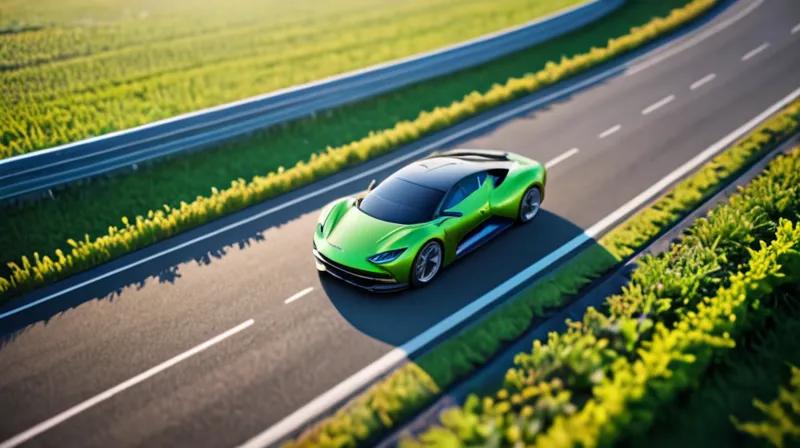
In a landmark achievement for autonomous vehicle development in Europe, Belgian startup Aidoptation has secured the first-ever Level 4 self-driving car permit in the European Union. The company’s robocar is now authorized to test at speeds of up to 120 km/h on public highways, marking a major step forward in the region’s autonomous driving landscape.
Level 4 Autonomy Without AI
What sets Aidoptation’s technology apart is its non-AI approach to autonomous driving. Rather than relying on machine learning or neural networks, the vehicle uses a combination of sensors, radar, and pre-programmed mapping data to navigate roads. This method, often referred to as rule-based or deterministic autonomy, offers a different path to self-driving capability compared to the AI-heavy systems used by competitors like Waymo or Tesla.
Regulatory Milestone and Road Testing
The approval covers 100 kilometers of the E313 and E314 motorways in Limburg, Belgium. This designation allows Aidoptation to conduct full-scale highway tests without human intervention, a critical step toward commercial deployment. The EU’s cautious regulatory stance on autonomous vehicles has historically slowed progress, but Aidoptation’s success highlights the potential for alternative technologies to gain traction.
Industry experts suggest that Aidoptation’s approach may offer a more predictable and safer path to full autonomy, particularly in structured environments like highways. While AI-driven systems are often praised for adaptability, they can struggle with edge cases and unexpected scenarios. Aidoptation’s system, by contrast, operates within a defined set of rules and data, potentially reducing risk in high-speed conditions.
Looking Ahead
With this breakthrough, Aidoptation is positioning itself at the forefront of a new wave of autonomous driving innovation—one that challenges the dominance of AI-based systems. As the company continues testing and refining its technology, the EU’s regulatory framework may evolve to embrace such alternative approaches, opening doors for more diverse and robust self-driving solutions across the continent.