Introduction
The recent $900 million funding round for XPENG's IRON humanoid robot platform marks a significant milestone in the development of physical artificial intelligence (AI) systems. This represents not just a financial achievement, but a strategic move toward commercializing embodied AI — AI systems that exist and interact within the physical world. Understanding this development requires delving into the complex intersection of robotics, machine learning, and capital markets in the AI sector.
What is Physical AI?
Physical AI refers to artificial intelligence systems that operate and interact within physical environments through robotic bodies or other tangible platforms. Unlike traditional AI that processes data in digital silos, physical AI systems must navigate, perceive, and manipulate real-world environments. This involves integrating multiple AI subfields including computer vision, natural language processing, control theory, and sensor fusion.
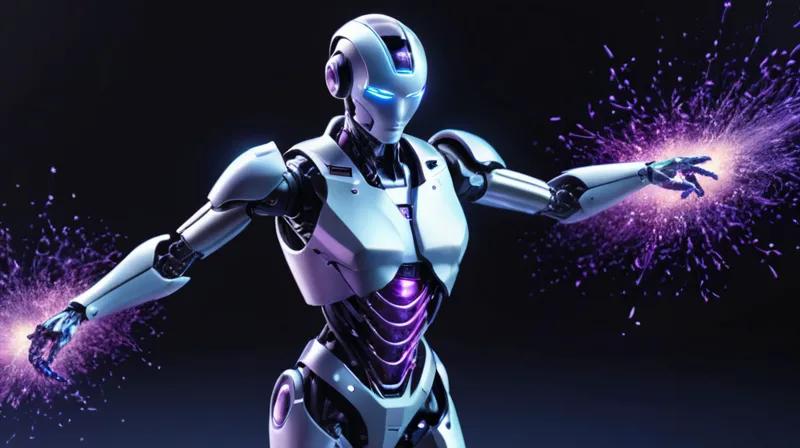
At its core, physical AI represents a paradigm shift from purely digital intelligence to embodied intelligence — where the AI's cognition is tied to its physical embodiment and interactions with the environment. The IRON platform exemplifies this by combining advanced AI algorithms with sophisticated mechanical engineering to create a humanoid robot capable of performing complex physical tasks.
How Does Physical AI Work?
Physical AI systems operate through a complex stack of interconnected technologies. At the foundation lies sensor integration — the robot must collect data from multiple modalities including cameras, LiDAR, microphones, and tactile sensors. This raw sensory data is then processed through deep learning networks that perform tasks like object recognition, spatial mapping, and human pose estimation.
The control architecture typically involves hierarchical decision-making systems. Lower-level controllers manage motor commands and real-time feedback loops, while higher-level AI systems handle planning, reasoning, and task execution. Reinforcement learning plays a crucial role, enabling robots to improve their performance through trial and error in real-world environments.
For XPENG's IRON platform, the system likely employs advanced neural network architectures trained on massive datasets of human movement and environmental interactions. The robot must also integrate with cloud-based AI services for complex reasoning tasks while maintaining sufficient autonomy for real-time decision-making.
Why Does This Matter?
This funding round represents a critical juncture in AI development, signaling market confidence in physical AI as a viable commercial technology. The $6.3 billion valuation demonstrates that investors view embodied intelligence as a transformative category with substantial long-term potential.
Several key factors drive this interest:
- Market Opportunity: Physical AI has applications spanning manufacturing, healthcare, logistics, and consumer services, creating a massive addressable market
- Technological Convergence: Advances in AI, robotics, and materials science have made physical AI systems more feasible and cost-effective
- Competitive Landscape: Companies like Tesla, Boston Dynamics, and now XPENG are competing to establish dominance in this emerging field
From a research perspective, physical AI development accelerates progress in several areas including multi-modal learning, real-time control systems, and human-robot interaction. The feedback loops between physical deployment and AI training create unique learning opportunities that are difficult to replicate in simulation-only environments.
Key Takeaways
This funding event illustrates several important trends in AI development:
- Physical AI represents a significant shift from digital-only intelligence to embodied cognition
- Capital markets are increasingly recognizing the commercial viability of robotics and AI integration
- The convergence of AI and robotics creates unique opportunities for both technological advancement and market disruption
- Investment in physical AI platforms like IRON indicates long-term strategic thinking in the AI industry
As we move forward, the success of platforms like XPENG's IRON robot will likely determine whether physical AI becomes a mainstream technology or remains a niche research domain. The integration of advanced AI algorithms with physical platforms represents one of the most challenging and promising frontiers in artificial intelligence development.