Introduction
Imagine watching a nature documentary and being unsure whether what you're seeing is real or somehow magically created. This is exactly what's happening with the latest BBC series, Blue Planet III. The show's creators are making a bold choice to keep some imperfect footage, even though they could easily use artificial intelligence (AI) to make everything look flawless. This decision is actually revealing something important about how we can tell the difference between real and AI-generated content.
What is AI-generated content?
Artificial intelligence, or AI, is like having a very smart computer that can learn and do tasks that usually require human intelligence. When we talk about AI-generated content, we mean media like videos, images, or even text that are created by these smart computers instead of human creators.
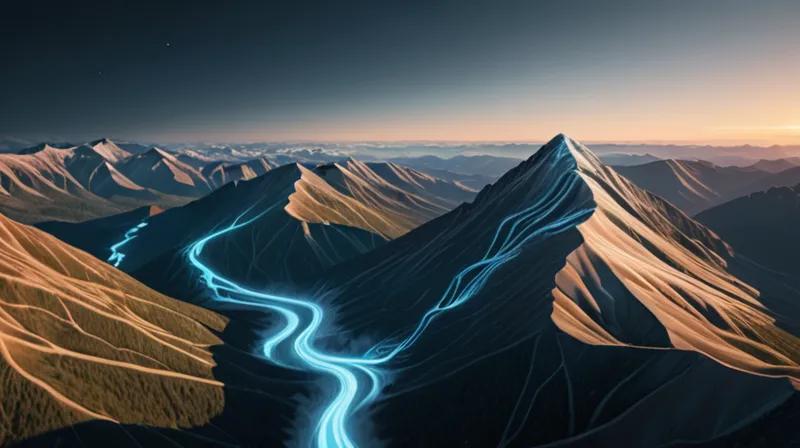
Think of it like this: If you asked a friend to draw a picture of a lion, they might draw it with some imperfections - maybe the mane looks a bit messy or the eyes are slightly different sizes. But if you asked an AI to draw the same lion, it might create something that looks too perfect, too clean, and too smooth. This is what we call 'AI polish' - the artificial perfection that makes things look unreal.
How does AI make things look too perfect?
AI systems like those used in video editing can make footage look incredibly sharp and clean. They can remove noise, smooth out rough edges, and even fill in missing parts of a video. This is called 'super-resolution' - making low-quality images look like high-quality ones.
But there's a problem: when everything looks too perfect, it can feel fake. For example, imagine if every photo in your family album looked like it was taken with a professional camera and edited to perfection. You might start to wonder if those photos are real or if they were digitally enhanced to look better than they actually were.
When AI is used to create nature footage, it can make the animals look too smooth, the lighting too perfect, or the background too clean. These subtle imperfections are what make real footage feel authentic to viewers. They're like the tiny details in a painting that make it look like it was created by a human artist.
Why does authenticity matter in nature documentaries?
Blue Planet III is different from previous nature series because it wants to show viewers the real world, not a perfect version of it. When a documentary shows a lion hunting, it's more powerful and meaningful if you can see the real struggle, the dust in the air, and the slight imperfections in the video.
This is because nature is messy and imperfect, and that's what makes it beautiful and real. If everything looks too polished, it can take away from the emotional impact of what you're watching.
It's like reading a story where every character is perfectly behaved and nothing ever goes wrong - it might be interesting, but it wouldn't feel like a real story. Nature documentaries need that realness to connect with viewers and help them appreciate the beauty and complexity of the natural world.
Key takeaways
- AI can make videos look incredibly smooth and perfect, but this perfection can make content feel fake
- Real footage often has small imperfections that make it feel authentic and genuine
- Blue Planet III is choosing to show real footage with its natural flaws to maintain authenticity
- This approach helps viewers connect with nature in a more meaningful way
- Recognizing the difference between real and AI-generated content is becoming increasingly important in our digital age