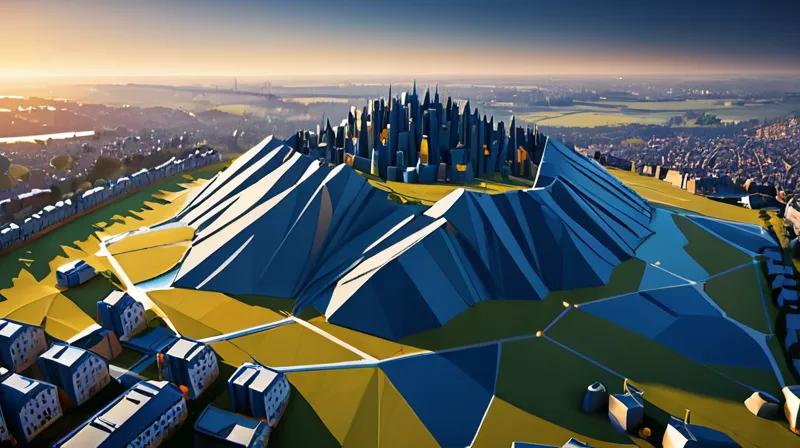
In a bold move that could reshape the AI landscape, researchers at the University of Cambridge have developed a planetary-scale AI model without relying on Nvidia’s dominant GPUs. The model, named TESSERA, was trained and deployed entirely using chips from AMD, marking a significant departure from the industry’s current reliance on Nvidia’s hardware.
TESSERA: A New Era in Earth Observation AI
TESSERA is designed to process vast amounts of Earth observation data, enabling advanced environmental monitoring and climate modeling. The model’s architecture draws inspiration from large language models, adapting their scalable design principles to the domain of geospatial data. By leveraging AMD’s EPYC processors and Radeon Instinct GPUs, the Cambridge team demonstrated that it’s possible to build and train large-scale AI systems without Nvidia’s chip ecosystem.
Why This Matters for the AI Industry
This development is not just a technical achievement — it’s a potential disruptor. The AI industry has long been dependent on Nvidia’s hardware, which has dominated both training and inference tasks for large models. By proving that AMD chips can handle such workloads, Cambridge’s team opens the door to a more diverse and potentially more cost-effective hardware ecosystem. The model was trained and deployed using Vultr’s cloud infrastructure, further emphasizing the growing role of alternative cloud providers and hardware vendors in AI development.
Implications for the Future
The success of TESSERA could prompt broader adoption of AMD’s AI hardware, especially in research and enterprise sectors looking to reduce their dependence on Nvidia. As AI models continue to scale, the availability of diverse, high-performance computing options becomes increasingly critical. Cambridge’s innovation may signal a shift toward a more competitive and decentralized AI hardware landscape.
Ultimately, TESSERA’s creation is a powerful reminder that innovation in AI isn’t limited to a single vendor — and that the future of large-scale AI may be more distributed than previously thought.


