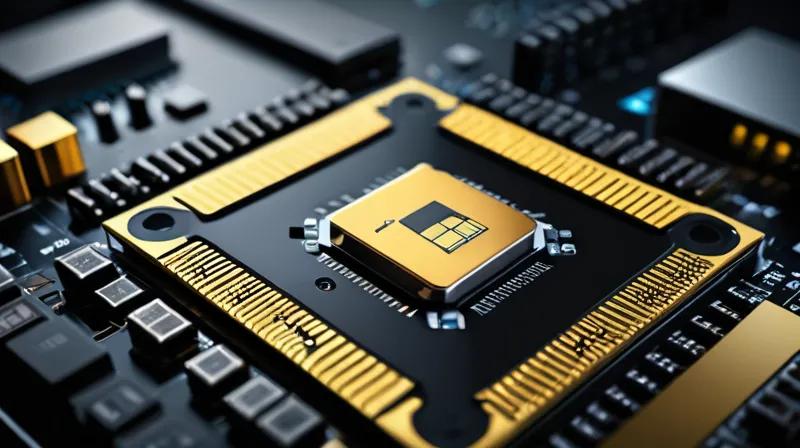
Microsoft has made a significant leap in quantum computing with the announcement of Majorana 2, a next-generation topological quantum chip that boasts a 1,000-fold increase in qubit reliability compared to its predecessor. This breakthrough not only marks a pivotal moment in the company’s quantum roadmap but also allows Microsoft to dramatically shorten its projected timeline for achieving a scalable quantum computer.
Revolutionary Reliability Boost
The Majorana 2 chip leverages advanced topological properties to enhance qubit stability, a critical factor in quantum computing where errors are frequent and costly. By improving reliability so substantially, Microsoft has effectively solved one of the most persistent challenges in quantum hardware development: maintaining coherence and minimizing error rates over extended periods. This achievement is particularly significant as quantum systems are inherently fragile and susceptible to environmental interference.
Agentic AI Drives Innovation
Microsoft attributes this advancement to the integration of agentic AI — a form of artificial intelligence capable of autonomous decision-making and problem-solving — into its quantum chip design process. The AI system was instrumental in optimizing the chip’s architecture and identifying configurations that maximized stability. This marks a notable shift in how quantum hardware is developed, moving away from traditional trial-and-error methods toward AI-driven, data-informed design. The use of agentic AI not only accelerates development but also enhances the precision and scalability of quantum systems.
Implications for the Quantum Future
With the new timeline now set for 2029 instead of 2033, Microsoft is positioning itself at the forefront of the quantum revolution. This acceleration could have wide-ranging implications for industries reliant on computational power, such as pharmaceuticals, finance, and cybersecurity. As quantum systems become more reliable and accessible, they could unlock solutions to problems previously deemed computationally intractable.
The company’s progress underscores the growing synergy between AI and quantum computing, where AI not only aids in design but also enhances the performance of quantum systems themselves. As the race to build a practical quantum computer intensifies, Microsoft’s breakthrough could serve as a catalyst for further innovation across the industry.