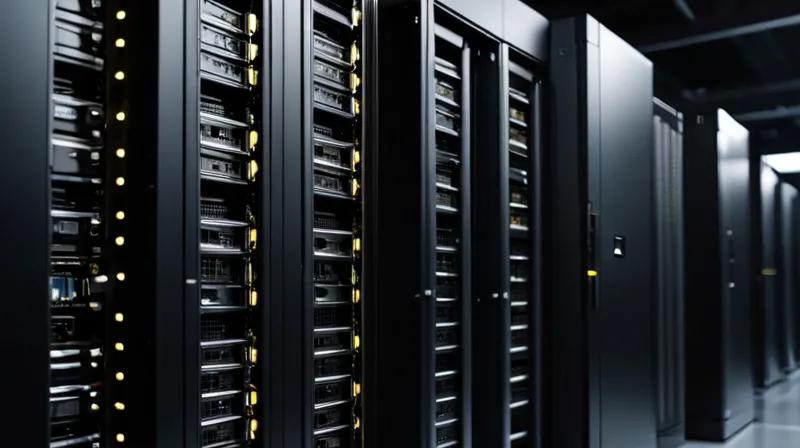
As artificial intelligence continues to evolve at breakneck speed, the demand for computational power is soaring—soaring so much that even the most advanced terrestrial data centers are struggling to keep up. In response, tech giants and space entrepreneurs are proposing a radical solution: building data centers in orbit. Elon Musk and Jeff Bezos, two of the most prominent figures in the tech and space industries, have put forward vastly different visions for how this could be achieved, sparking debate among scientists and engineers.
Musk’s Vision: A Million Satellites
Elon Musk’s SpaceX has already begun deploying its Starlink constellation, a network of satellites designed to provide high-speed internet globally. Now, Musk is pushing for the next logical step—using these satellites as data centers. He envisions a system of one million orbital data centers, which would dramatically increase processing capacity and reduce latency for AI applications. This ambitious plan would essentially turn the night sky into a global supercomputer, with each satellite functioning as a node in a distributed AI infrastructure.
Bezos’ Alternative: 51,600 Satellites
Jeff Bezos, through his space venture Blue Origin, has proposed a different approach. His plan involves launching 51,600 satellites to form a more extensive orbital network. Unlike Musk’s focus on efficiency and minimalism, Bezos’ vision emphasizes scale and redundancy, aiming to create a resilient and distributed computing ecosystem. While both plans aim to harness the power of space, they differ significantly in scope and execution, raising questions about resource allocation, environmental impact, and practicality.
Scientific Skepticism
Scientists and engineers are now questioning the feasibility and implications of these grand plans. The energy required to power and maintain such a vast satellite network, the risk of space debris, and the potential for interference with Earth-based systems are all major concerns. "The idea is intriguing, but we need to understand the real costs," said Dr. Sarah Chen, a space technology researcher. "We must balance innovation with sustainability." As these visions take shape, the scientific community is calling for a more measured approach to ensure that the race to orbit doesn't lead to unintended consequences.
The debate over orbital data centers is far from over. As Musk and Bezos continue to push the boundaries of what's possible, the world watches closely—curious, skeptical, and eager to see how the future of AI and space will intersect.