Space-Based AI Data Centers: A Technical Deep Dive
Introduction
SpaceX’s recent IPO filing has sparked significant debate around the feasibility of orbital data centers—computing infrastructure positioned in space to process AI workloads. While Elon Musk once described such systems as a "no-brainer" achievable within a few years, the company’s confidential S-1 filing now acknowledges substantial technical and commercial risks. This article unpacks the core technology, its engineering challenges, and why the viability of orbital AI centers remains uncertain.
What Are Orbital AI Data Centers?
Orbital AI data centers are computing facilities deployed in space, designed to host and process artificial intelligence models using specialized hardware. These systems aim to leverage the unique advantages of space—such as reduced atmospheric interference, minimal latency for global communications, and access to high-energy solar power—while performing compute-intensive AI tasks like training large language models (LLMs) or processing real-time satellite imagery.
Conceptually, they resemble traditional data centers but are positioned in low Earth orbit (LEO) or geostationary orbit (GEO), connected to ground stations via high-speed laser or radio links. Unlike terrestrial data centers, these systems must be self-contained, energy-efficient, and capable of operating in the harsh environment of space.
How Do They Work?
The architecture of orbital AI centers involves several critical components:
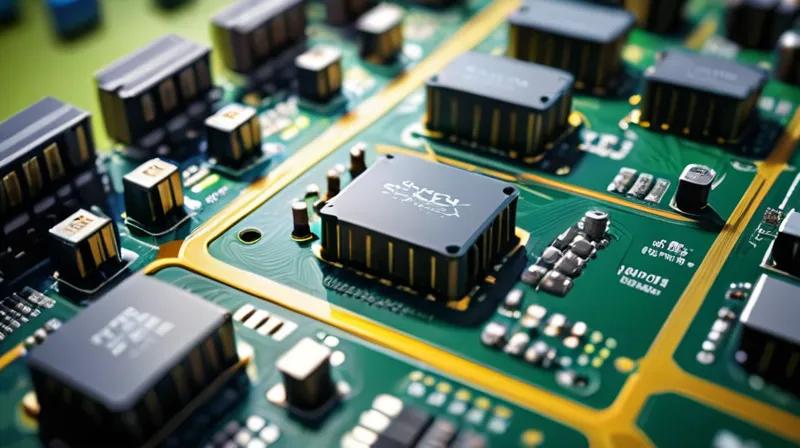
- Hardware Systems: These include specialized AI accelerators (e.g., TPUs, FPGAs), high-capacity storage units, and power generation systems (solar panels and batteries). The hardware must be radiation-hardened and designed to withstand thermal cycling and microgravity.
- Thermal Management: In the vacuum of space, heat dissipation is extremely challenging. Active cooling systems or heat pipes are required to maintain optimal operating temperatures for sensitive electronics.
- Communication Links: High-bandwidth, low-latency links between orbiting centers and ground stations are essential. This often involves laser communication systems, which are still emerging technologies with limited commercial deployment.
- Orbital Mechanics: The system must be precisely positioned and maintained in orbit, requiring continuous station-keeping and potentially robotic refueling or component replacement.
From an AI perspective, these systems would host distributed AI models, enabling edge computing with reduced latency compared to terrestrial cloud centers. However, the challenge lies in efficiently transferring data between orbit and Earth, as well as maintaining consistent performance under the constraints of space.
Why Does This Matter?
The viability of orbital AI centers has profound implications for the future of computing, AI infrastructure, and space commercialization:
- Latency and Bandwidth: For applications like autonomous vehicles, real-time satellite analytics, or global communications, space-based processing can offer orders-of-magnitude improvements in latency compared to ground-based systems. However, current communication technologies limit the data transfer rate between orbit and Earth.
- Scalability: As AI models grow larger and more compute-intensive, traditional data centers face scalability challenges. Orbital systems could provide a new paradigm for distributed computing, especially if they can be mass-produced and deployed at scale.
- Resilience: Space-based systems are inherently more resilient to terrestrial disasters like earthquakes, floods, or cyberattacks, making them attractive for critical infrastructure.
However, the technical and economic hurdles are significant. The cost of launching hardware to orbit is still high, and the risk of failure due to radiation, mechanical issues, or orbital decay is non-negligible. Moreover, the infrastructure required to support such systems—ground stations, launch vehicles, and maintenance protocols—is complex and expensive to develop.
Key Takeaways
- Orbital AI data centers are an emerging concept that combines AI compute with space-based infrastructure.
- They offer advantages in latency, scalability, and resilience but face significant engineering and economic challenges.
- Current technologies, such as laser communication and radiation-hardened hardware, are not yet mature enough for large-scale deployment.
- SpaceX’s own filing reveals that these systems are still experimental and may not achieve commercial viability in the near term.
- The vision of space-based AI is compelling but remains a long-term, high-risk, high-reward endeavor.
As AI continues to evolve, the integration of space-based compute resources may become a critical component of the global infrastructure. However, the journey from concept to commercial reality is fraught with technical, logistical, and financial challenges that will likely take years to resolve.