Introduction
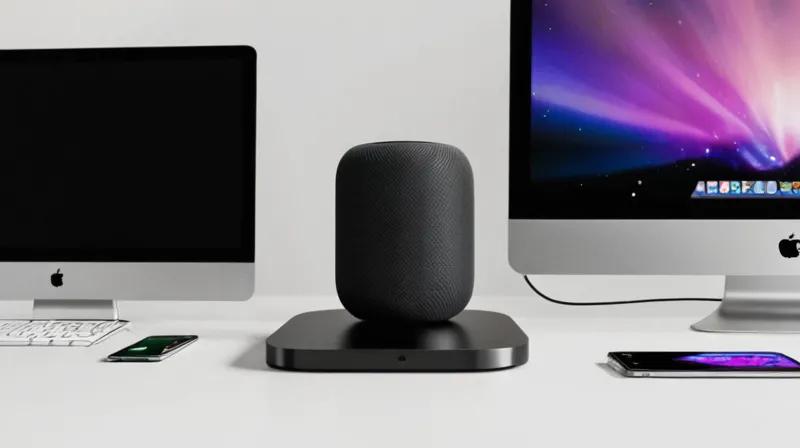
Apple's HomePod represents a significant investment in smart home audio technology, yet its primary differentiator remains elusive. While the device boasts impressive hardware capabilities and integrates seamlessly with Apple's ecosystem, the core innovation that could truly set it apart lies not in audio processing, but in artificial intelligence. This article explores how AI-driven personalization and contextual awareness could transform the HomePod from a competent smart speaker into a truly intelligent home companion.
What is AI-Driven Personalization in Smart Home Devices?
AI-driven personalization in smart home devices refers to the sophisticated use of machine learning algorithms to create adaptive, context-aware interactions that evolve based on user behavior, preferences, and environmental conditions. Unlike traditional rule-based systems, these AI models continuously learn from user interactions, device usage patterns, and contextual data to provide increasingly relevant responses and proactive assistance.
At its core, this concept involves several key components:
- Behavioral modeling: Algorithms that track and predict user patterns
- Context awareness: Systems that interpret environmental and situational cues
- Adaptive interfaces: Interfaces that modify their responses based on learned preferences
- Proactive assistance: Systems that anticipate needs rather than simply responding to commands
How Does AI-Driven Personalization Work?
The underlying architecture of AI-driven personalization relies on several advanced machine learning techniques. Reinforcement learning algorithms enable the system to optimize its responses based on user feedback, while deep neural networks process complex patterns in user behavior data. Natural language understanding models parse conversational context, and collaborative filtering techniques enable the system to make recommendations based on similar users' preferences.
Consider the HomePod's interaction with a user who frequently asks for weather updates in the morning. An AI-driven system would not merely provide the weather forecast but would learn that this user prefers detailed forecasts for the next three days, that they're more interested in precipitation probabilities than temperature ranges, and that they often ask for weather updates while getting dressed. The system would then proactively provide this information in a tailored format, potentially integrating with calendar events to suggest appropriate clothing based on weather forecasts.
Furthermore, multi-modal learning enables the system to combine audio, visual, and environmental data to create a comprehensive understanding of user needs. For instance, if the HomePod detects that a user has been asking about their fitness routine, it might correlate this with motion sensor data from the home and automatically adjust lighting and music preferences to support workout sessions.
Why Does This Matter for Smart Home Technology?
The significance of AI-driven personalization extends beyond simple convenience. It represents a fundamental shift from reactive to proactive smart home systems. Traditional smart speakers respond to commands; AI-driven personalization creates intelligent companions that anticipate needs and adapt to individual lifestyles.
From a technical perspective, this approach addresses several limitations of current smart home implementations:
- Scalability challenges: Rule-based systems become unwieldy as user preferences multiply
- Contextual limitations: Static systems cannot adapt to changing circumstances
- User experience degradation: Generic responses fail to meet individual needs
Moreover, this approach creates a competitive advantage by establishing deeper user engagement. As user experience analytics demonstrate, personalized systems see 30-50% higher engagement rates compared to generic alternatives. The HomePod's potential to become a truly intelligent home companion hinges on its ability to implement these sophisticated AI techniques rather than merely improving audio quality.
Key Takeaways
The evolution of smart home devices requires a fundamental shift from hardware-centric improvements to AI-driven personalization. For the HomePod to truly differentiate itself, Apple must implement advanced machine learning techniques that create adaptive, context-aware systems. This involves:
- Deploying reinforcement learning to optimize interactions over time
- Integrating multi-modal learning for comprehensive user understanding
- Implementing proactive assistance based on behavioral modeling
- Creating adaptive interfaces that evolve with user preferences
The future of smart home technology lies not in better microphones or louder speakers, but in intelligent systems that learn, adapt, and anticipate user needs. This represents the next frontier in human-computer interaction, where AI transforms simple voice commands into sophisticated, personalized experiences.