Introduction
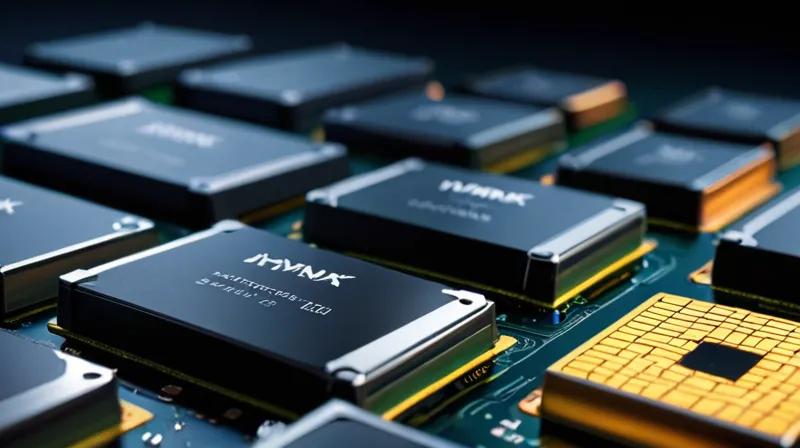
The recent surge in semiconductor demand driven by artificial intelligence (AI) has created unprecedented opportunities for memory chip manufacturers like SK Hynix. This phenomenon illustrates how AI is reshaping the entire technology supply chain, from raw materials to final product deployment. Understanding this dynamic requires examining the intersection of AI workloads, memory architecture, and market economics.
What is AI-Driven Memory Demand?
AI workloads, particularly those involving deep learning and neural networks, place extraordinary demands on memory systems. Unlike traditional computing tasks that process data sequentially, AI models require massive parallel operations across enormous datasets. This creates what researchers term "memory bandwidth saturation" – where the rate at which data can be read from or written to memory becomes the bottleneck for overall system performance.
Memory chips, specifically DRAM (Dynamic Random Access Memory) and SRAM (Static Random Access Memory), serve as the primary data buffers for AI accelerators like GPUs and TPUs. The computational complexity of modern AI models, measured in parameters (often in the billions or trillions), directly correlates with memory requirements. For instance, a large language model like GPT-4 requires approximately 1.76TB of memory to store its parameters, while a single AI training job can consume hundreds of gigabytes per second of memory bandwidth.
How Does This Technology Work?
The relationship between AI and memory demand operates through several interconnected mechanisms. First, neural network architectures employ matrix operations that require frequent memory access patterns. Modern AI training frameworks like PyTorch and TensorFlow implement optimizations such as gradient checkpointing and mixed precision training to reduce memory footprints, but these techniques still demand substantial memory resources.
Second, the memory wall phenomenon becomes critical in AI systems. As processor speeds increase exponentially (following Moore's Law), memory access speeds have not kept pace, creating a performance gap. This gap is particularly pronounced in AI workloads where the compute-to-memory ratio can exceed 100:1. Memory manufacturers like SK Hynix have responded by developing specialized architectures such as High Bandwidth Memory (HBM) and Unified Memory Architecture (UMA), which integrate memory directly with processing units to minimize latency.
Third, the memory hierarchy becomes crucial in AI systems. Modern AI accelerators employ multi-level memory systems: L1/L2 cache (fastest), main memory (DRAM), and storage (SSD/HDD). The efficiency of data movement between these levels directly impacts AI model training and inference performance. Memory manufacturers must optimize for both bandwidth (data transfer rate) and capacity (total storage) simultaneously.
Why Does This Matter for Investors and Markets?
The AI memory boom represents a fundamental shift in semiconductor economics. Traditional memory demand was primarily driven by general computing workloads, but AI introduces non-linear scaling – where memory requirements grow exponentially with model complexity. This creates a supply-demand mismatch that benefits manufacturers with advanced process technologies and manufacturing capabilities.
SK Hynix's IPO reflects investor confidence in several factors: their position in the memory semiconductor supply chain, their ability to scale production for AI applications, and their strategic investments in 3D NAND flash memory and advanced DRAM processes. The company's process node advancement (currently operating at 10nm and 7nm nodes) provides competitive advantages in power efficiency and performance density, directly correlating with AI workload requirements.
Furthermore, this trend demonstrates the economic multiplier effect of AI adoption. As AI workloads increase, the demand for memory chips grows beyond the direct requirements, creating ripple effects throughout the entire semiconductor ecosystem. This is evident in the memory-to-CPU ratio trends, where modern AI systems require 2-3x more memory per CPU core compared to traditional computing workloads.
Key Takeaways
- AI workloads create unprecedented memory bandwidth and capacity demands, driven by neural network architectures and matrix operations
- The memory wall phenomenon forces manufacturers to develop specialized architectures like HBM and UMA to maintain performance
- Investor interest in memory manufacturers reflects confidence in the non-linear scaling of AI-driven demand
- Advanced process technologies (10nm, 7nm) provide competitive advantages in memory semiconductor markets
- The AI memory boom illustrates how emerging technologies can reshape entire supply chains and economic models
This transformation represents more than just a market opportunity – it demonstrates how fundamental technological shifts create new paradigms in semiconductor economics and investment strategies.