Introduction
Imagine you're building a smart home. You have lights that turn on when you walk in, a thermostat that adjusts temperature automatically, and a security system that alerts you when someone approaches your door. All of these systems need to talk to each other to work together seamlessly. In the world of artificial intelligence (AI), there's a similar challenge — AI systems need to communicate with each other and with other technologies to function properly. But as AI becomes more common, new ways of connecting these systems are emerging, and these new connections can create new problems for security.
What is an MCP server?
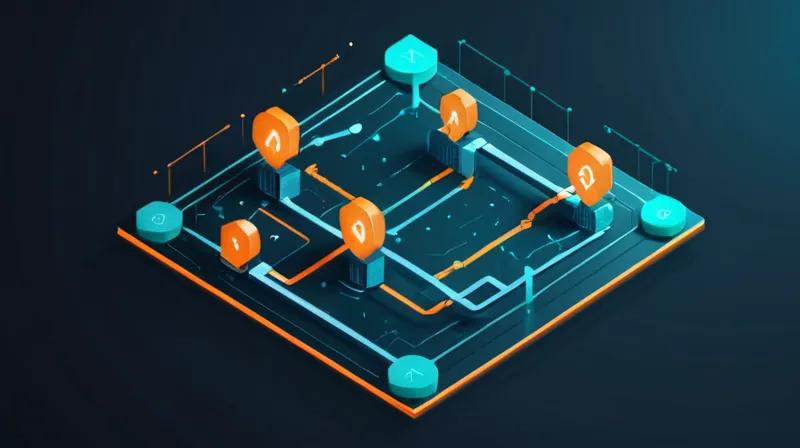
Think of an MCP server like a central hub or a traffic controller in a busy city. In the AI world, MCP stands for Model Control Protocol. Just like a traffic controller helps cars move smoothly through intersections, an MCP server helps different AI systems work together by managing how they share information and commands.
These servers are becoming increasingly important as AI systems grow more complex. Instead of one AI system doing everything, we now have many specialized AI systems that need to communicate with each other. The MCP server acts as the middleman, ensuring that one AI system can tell another what to do, and that they can share data in a secure way.
How does an MCP server work?
Let's use a simple example to understand how this works. Imagine you're planning a trip with a friend. You both have different apps on your phones — one app helps you find restaurants, another helps you book hotels, and a third helps you plan your route. But to make your trip smooth, you need these apps to talk to each other.
An MCP server is like a personal assistant who makes sure all your apps are working together. When you decide to book a hotel, the assistant tells the restaurant app to suggest nearby places, and the route app to plan the best way to get there. The MCP server coordinates all these different AI systems so they can work as a team.
But here's the key point: just like a personal assistant might be a target for someone who wants to steal your information, MCP servers can also be targets for hackers who want to break into AI systems. Because these servers manage so much communication, if someone can break into one, they might be able to access many other connected AI systems.
Why does it matter?
As more and more companies adopt AI, they're also adopting MCP servers to connect their AI systems. This is great because it makes AI more powerful and flexible — AI systems can now work together in more complex ways, leading to better results in everything from healthcare to finance.
However, there's a trade-off. The faster AI systems can connect and communicate with each other, the harder it becomes for security experts to keep up. It's like a city that grows so quickly that the police can't keep track of all the new roads and intersections. The same thing is happening with AI — new connection methods are appearing rapidly, and security teams are struggling to protect all of them.
This means that as more companies use MCP servers, the risk of cyberattacks increases. Hackers are already starting to target these servers because they offer a way to access multiple AI systems at once. That's why cybersecurity experts are calling them the "newest attack surface" — a new area where bad actors can try to break in and cause harm.
Key takeaways
- MCP servers act like traffic controllers for AI systems, helping them communicate and work together.
- As AI systems become more complex, they need more connections, and MCP servers are becoming essential for this communication.
- Because MCP servers manage so much communication, they are becoming a new target for hackers.
- Security teams are struggling to protect these new connections as they appear faster than ever before.
- The more connected AI systems become, the more important it is to protect these connection points.
So, while MCP servers help make AI more powerful and useful, they also introduce new challenges for keeping our AI systems safe. As AI continues to grow, we must remember that every new connection we make — like adding a new road to a city — also means we need to think about how to keep it secure.