Introduction
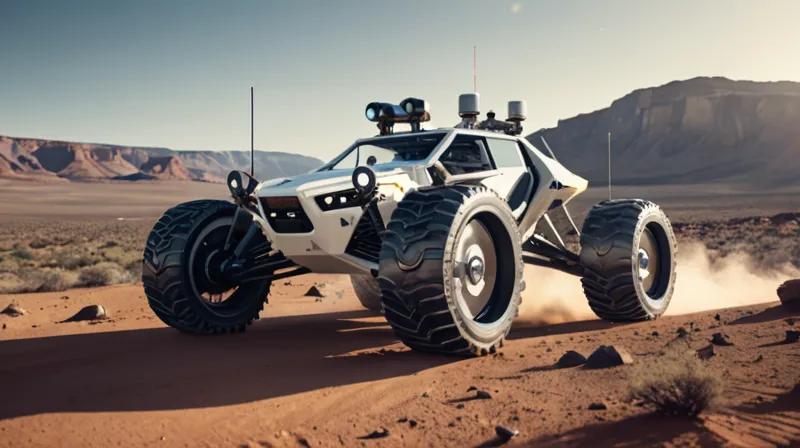
NASA's latest rover prototype, ERNEST, has demonstrated unprecedented mobility in field testing, covering 16 miles in just 37 hours — a performance that surpasses current Mars rovers by a factor of 10. This advancement hinges on sophisticated AI and control systems that enable autonomous navigation and decision-making in complex terrain. Understanding how ERNEST achieves this level of performance requires delving into the advanced technologies that underpin modern rover autonomy.
What is Autonomous Navigation in Rover Systems?
Autonomous navigation refers to the capability of a robotic vehicle to traverse unknown or unstructured environments without direct human intervention. In the context of space exploration, this involves rovers making real-time decisions about path planning, obstacle avoidance, and speed optimization while operating in remote, hostile terrains such as Mars or the Moon. Unlike Earth-based robots that can rely on GPS and continuous communication with operators, space rovers must function independently for extended periods with limited bandwidth and delayed communication.
How Does ERNEST Achieve Its Speed and Autonomy?
ERNEST's performance gains stem from a combination of advanced sensor fusion, machine learning algorithms, and adaptive control systems. The rover employs a suite of LiDAR (Light Detection and Ranging), stereo cameras, and inertial measurement units (IMUs) to build real-time 3D maps of its surroundings. These sensors feed into a perception system powered by deep learning models trained to recognize terrain types, potential hazards, and optimal paths.
The key innovation lies in the integration of model predictive control (MPC) with reinforcement learning (RL). MPC uses a mathematical model of the rover's dynamics to predict how different control inputs will affect future states, enabling it to plan trajectories that maximize speed while ensuring safety. RL agents, trained either in simulation or on real-world data, optimize the rover's decision-making process by learning to balance speed, energy consumption, and risk. The synergy between these systems allows ERNEST to dynamically adjust its driving behavior based on terrain conditions — for instance, accelerating on smooth surfaces while slowing down on rocky or unstable ground.
Additionally, ERNEST utilizes multi-agent coordination techniques, where multiple rovers or subsystems work in concert. This includes distributed path planning, where different parts of the rover’s AI system collaborate to determine the most efficient route, and predictive modeling to anticipate terrain changes or hazards before they are encountered.
Why Does This Matter for Future Exploration?
ERNEST's capabilities represent a paradigm shift in planetary exploration. Current rovers like Perseverance travel at speeds of only 0.03 mph, limiting their scientific return and mission duration. Faster mobility allows rovers to cover more ground, access previously unreachable sites, and respond more quickly to time-sensitive scientific opportunities, such as detecting transient phenomena or collecting samples from diverse locations.
This advancement also has implications for future lunar and Mars missions, where rovers may be required to perform complex tasks like sample return, construction, or even habitat deployment. The AI systems developed for ERNEST can be adapted for other autonomous systems, including Earth-based robots used in disaster response, mining, or agriculture.
Key Takeaways
- ERNEST's 10x speed improvement over existing Mars rovers is enabled by advanced AI systems combining sensor fusion, machine learning, and control theory.
- Key technologies include model predictive control (MPC), reinforcement learning (RL), and multi-agent coordination for real-time decision-making.
- Autonomous navigation systems must balance speed, safety, and energy efficiency in unpredictable environments.
- This progress paves the way for more efficient planetary exploration and broader applications in Earth-based robotics.