Where AI meets science: discoveries in biology, physics, climate, and more.
10 articles
Auxilium Biotechnologies has successfully bioprinted kidney and liver tissue in space, marking the first time either has been created in a microgravity environment.
This article explains how a scaffold-split Random Forest QSAR model, combined with tools like ChEMBL, RDKit, SHAP, and BRICS, can autonomously identify and design novel EGFR inhibitors, demonstrating advanced AI applications in drug discovery.
Learn to build a simulation of synthetic cells that eat, grow, and divide using Python. This hands-on tutorial demonstrates the principles behind artificial life systems like the SpudCell research.
NASA has contracted Katalyst Space Technologies to rescue its aging Swift telescope, which is slowly drifting out of control in orbit. The mission, set to begin as early as Tuesday, is both urgent and technically complex.
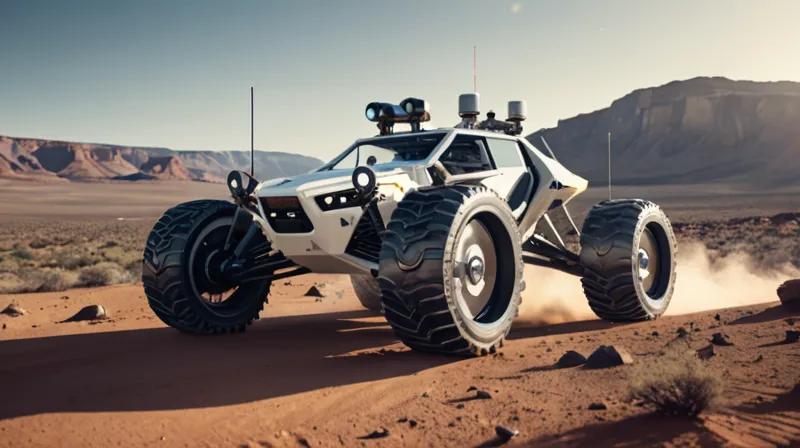
NASA's ERNEST rover prototype achieves 10x faster mobility than current Mars rovers through advanced AI systems combining machine learning, sensor fusion, and predictive control.
Chinese peptide research labs backed by cryptocurrency investments are experiencing rapid growth, accelerating drug discovery in personalized medicine. The intersection of blockchain funding and biotechnology is creating new opportunities and challenges for medical innovation.
Google's Verily subsidiary seeks EPA approval to release 64 million Wolbachia-infected mosquitoes in Florida and California to combat dengue and Zika.
The Pentagon has released 162 UFO-related files on war.gov/ufo, with two-thirds redacted. The move is seen as a step toward transparency in UAP investigations.
The world's oldest cord blood bank is building a stem cell platform that could revolutionize regenerative medicine by transforming discarded cord blood into patient-specific iPSCs.
Max Hodak's Science Corp. is preparing to place its first sensor in a human brain, potentially revolutionizing treatment for neurological conditions. The device delivers gentle electrical stimulation to damaged brain or spinal cord cells to encourage healing.